Author

Francine Smith

Browsing

The field of arboriculture is evolving all the time with changing technologies and new landscaping methods emerging. Research has been growing at a tremendous rate, while customer awareness is at an all-time high. This article explores the trends that will shape the grounds maintenance and landscaping industry in the future.

Emphasis on functionality

In the future, experts will know the best pruning methods for optimal tree growth and health. They will have information on the best time to prune different species of trees and plants of varying ages. Currently, some tree infections and damages are fatal. In the future, landscapers will have methods of tree surgery that will increase the survival rates. Check out details of the best forestry management contractors Clarendon County SC to seek their assistance. 

Experts also envision a future where freewheelers such as grass serve a functional purpose by reducing erosion and attracting pollinators. With the demand for urban landscaping on the increase, landscapers will need to be aware of the optimal light requirements for different plants used in interior spaces.

Environmental sustainability

Grounds maintenance clients are becoming more environmentally aware than in the past. They will be looking for landscapers who can source shrubs trees and other plants that minimize resource utilization. For instance, a client in a dry area may want the landscaper to use plants that are native to the area or most adaptable to the local climate. Similarly, there will be an increased emphasis on the use of local construction materials such as stones and timber.

The demand for niche species such as plants that thrive in desert conditions, saline water, and waterlogged land will increase. Clients will also be looking for trees that enrich the biodiversity of an area by allowing birds and other wildlife to thrive.

Extreme weather

In the future, more trees will be exposed to extreme meteorological events than is the case today. Landscapers will need to understand how different forms of precipitation and varying scales of wind will harm trees. They will also need to know how topography and soil structure affects the stability of different plant species under extreme pressure.

Expanding knowledge

Research in the field of urban forestry and other aspects of arboriculture has increased in recent years. The new information will enable landscapers to explore innovative methods and tools for tree care. Professionals will become more aware of the impact of practices such as pruning and root system management on trees and other landscaping plants.
In the future, experts will know the best pruning methods for optimal tree growth and health. They will have information on the best time to prune different species of trees and plants of varying ages. Currently, some tree infections and damages are fatal. In the future, landscapers will have methods of tree surgery that will increase the survival rates.
Further, new methods of tree risk assessment, growth patterns, and management of root systems will continue to emerge. Meanwhile, landscapers will have a huge trove of data that they will use to explore areas of future inquiry. All this research will produce insights that will improve the practice of landscaping and ground maintenance. Discover more about futuristic landscaping on our site.

Throughout recent years we have become more environmentally conscious about the decisions we make and the effect of them, so much so tackling climate change is now an integral part of many people’s everyday lives. Tackling climate change is no longer simply a question on government agendas, and people of all ages from all walks of life have become more proactive in their attitudes towards the environmental crisis which is unfolding.

Regardless if your job title is a teacher, parent or entire corporation we all carry the responsibility of tackling the problem of environmental change and informing the younger generation of the importance of this. Let’s take a look at how businesses, classrooms and social media activists are amplifying this extremely important message.

It’s time for schools to make a change

When it comes to delivering lessons on climate change, a survey by Yougov found many teachers feel ‘ill-equipped’ with the resources and knowledge needed to inform students. In fact, prioritising climate change education is an issue supported by over 69% of those included in the survey and calls to add it to the school curriculum in the UK are only growing. In June 2019, Labour announced its pledge to make the climate emergency an inherent part of the national curriculum in primary schools and onwards. While climate change is currently taught in key stage 3 (age 11-14) and key stage four (age 14-16), many key activists and leaders have stressed that this isn’t enough.

After Greta Thunberg, a social media activist, skipped lessons to undergo a solo protest outside the Swedish Parliament in Stockholm, this triggered a wave of strikes throughout many schools. This had a domino effect across the globe and Greenpeace have curated a worldwide map of strike locations with most being held every Friday, known as ‘Fridays for Future’. Children of school age on every continent have organised themselves and led a call to action, and education methods are changing as a result. EduCCateGlobal have generated a training plan to be put in place for teachers, and more than 600 teachers have signed up to the module-based program through which they receive UN accreditation as a ‘climate change teacher’. This is an extremely positive step towards building a strong system of education which tackles the biggest issues surrounding climate change.

Speaking of climate change: The Greta Effect

The platform for young social media activists is continuously growing as before mentioned. These youngsters are equipped and ready to spread awareness surrounding our ecological crisis. Greta Thunberg has become a prolific figure for tackling climate change, addressing the topic with a no-nonsense, factual based approach.

After Thunberg’s solo protest, it had a domino effect across the globe. So much so the likes of Greenpeace have even designed a worldwide map of strike locations. Most are held every Friday, known as ‘Fridays for Future’. Children of school age on every continent have organised themselves and led a call to action, and education methods are changing as a result.

After her appearance at the United Nations Climate Change Conference in 2018 and the global spark of #FridaysForFuture movement, this has triggered two efficiently organised events in March 2019. These events saw more than 1.6 million people from 133 countries become active demonstrators. Greta has taken her campaign to grace covers of some of the biggest publications around the world, from Teen Vogue to TIME. She told the latter: “Young people who are in developing countries are sacrificing their education in order to protest against the destruction of their future and world”. Young people are certainly listening to Greta as a voice of their generation.

Greta said “I realised that no one is doing anything to prevent this from happening so then I have to do something” when asked her view on how she thinks politicians are addressing climate change. From sailing across the Atlantic on a zero-carbon yacht, to helping all of her own family give up meat, Greta is certainly leading the way towards a greener future.

Go greener in everyday life

To inspire young people to care for the climate, simple things such as being conscious about it in our own home can be extremely beneficial.

How to live green

We can teach children some good, green habits from within our own homes. 43.2% of households recycled their waste in 2018, but this figure needs to reach 50% by 2020 in order to comply with the EU target. Teaching kids to recycle can be fun, and you can get your little ones involved by getting crafty with some DIY recycling bins. You could push them to come up with creative ways to reuse household products such as cardboard cereal boxes and milk bottles. Composting is also becoming a popular choice in many households. You don’t have to be an expert gardener to get started with some kitchen composting! From banana skins to apple cores, avocado pits and more, anything can be composted, and over time you’ll create your own nutrient rich fertilizer.

It may come as a surprise, but did you know we can be green when shopping too? While there’s a lot of uncertainty surrounding what the best eco-friendly clothes materials are, many fashion companies are striving to use more recycled materials in their garment production processes. Muddy Puddles is amongst these brands. They are proud to produce boys waterproof jackets using more recycled fabrics. They’re perfect for dressing your mini eco-warriors in!

When combatting climate change, whether we’re teachers, parents or companies we all have the power to make a change. There are so many innovative, simple life changes that you can make to get started.

Sources:

https://www.statista.com/statistics/444744/household-recycling-rate-uk/

https://assets.publishing.service.gov.uk/government/uploads/system/uploads/attachment_data/file/784263/UK_Statistics_on_Waste_statistical_notice_March_2019_rev_FINAL.pdf

https://www.theguardian.com/environment/2019/jun/21/teachers-want-climate-crisis-training-poll-shows

https://time.com/5595365/global-climate-strikes-greta-thunberg/

https://medium.com/uncclearn/5-young-environmental-activists-making-a-difference-in-climate-change-f211e070ab53

https://www.theguardian.com/commentisfree/2019/feb/15/planet-children-protest-climate-change-speech

https://www.telegraph.co.uk/family/life/greta-thunberg-generation-children-pushing-parents-go-greener/

https://www.edie.net/news/9/In-numbers–the-UK-public-s-attitudes-towards-climate-change/

https://www.theguardian.com/science/2018/sep/01/swedish-15-year-old-cutting-class-to-fight-the-climate-crisis

https://www.greenmatters.com/food/2018/12/07/ZboPlt/what-is-composting

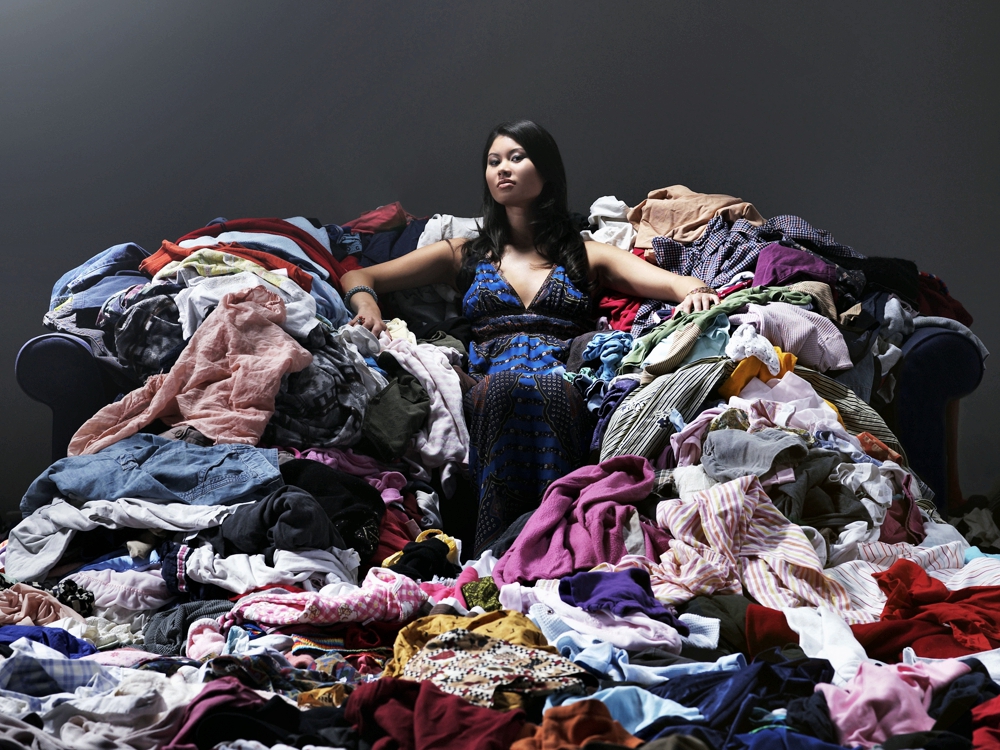
The fashion trends are constantly changing as fast as a blink of an eye. With that, it’s taking a toll on our environment as 300,000 tonnes of clothing ends up being dumped on landfills across the UK each year. That’s even before you add accessories and make-up products to the mix.

An outcry had erupted online in 2017, after Burberry had revealed they burned their excess stock, worth more than $50 million worth of clothes, perfumed and accessories. Our wasteful nature doesn’t really help the issue either, combining it with fast fashion, it’s crippling our planet. Wrap had conducted a study of the textiles industry, which revealed between 2012 and 2016, the UK carbon footprint had increased from 24 million tonnes to 26.2 million tonnes of C02.

With countless numbers of clothes heading to the landfill, and the nature of the fashion industry moving at such a rapid speed, are there any solutions for tackling the impact on the environment whilst at the same, keep the industry ticking over? Teaming up with waste management expert, Reconomy we investigate waste solutions for textiles.

Using food for fabrics

A report leaked by Tree Hugger suggested some recent processes could certainly help tackle the initial carbon footprint cause by textile production.Making clothes uses up a lot of resources, such a water, fuel, and chemical dyes. Circular Systems is offering a solution to that — fibres made from food scraps. In fact, the initiative would solve two issues at once, by making textile production less wasteful and combating the food waste problem.

Circular Systems operate technologies that use existing scraps of textiles and discarded clothing and create new fibres out of them. This means the company addresses both the environmental impact at the beginning of a textile cycle, with its creation, and at the end of its life, avoiding the landfill.

Coffee in clothing

A similar innovation had been shared by Bio Based World News that saw processing using coffee grounds to make fabrics. Singtex is the name of the company responsible for changing how we look at what our clothes could be made from. Like Circular Systems, they are looking to tackle two troubles head-on, but converting a backlog of waste from one sector (again, the food industry) and turning it into a useable item in another sector (the textiles industry).

Love Your Clothes website

Launched by WRAP, this project aims to help the textiles industry deal with their waste problem.This website offers customers a series of helpful advice points, such as:

  • Buying clothes — tips on how to “buy smart”, with an emphasis on clothes that will last, hiring options, swapping stations, or buying second-hand.
  • Care and Repair — this section gives some great lifehacks on how to look after your clothes to keep them living longer. It also advises on how to repair clothes to give them a new lease of life.
  • Refashion and Upcycle — something of a lost art, it certainly needs to see a revival! Here, instead of buying new clothes, the website encourages people to look at their old clothes and find ways to alter or combine items to make new outfits. The best part of this is you end up with a totally unique item!
  • Unwanted clothes — for clothes that don’t fit, that you’ve grown out of, or no longer need, sometimes upcycling isn’t an option. But that doesn’t mean you get to fling them away! Dispose of your clothes responsibly, with a range of different ways to sell, swap, or donate.

Introducing exchange programmes

Several retail outlets have begun running their own exchange programmes, that allow customers to make use of their local shops to drop unwanted clothes for recycling. Sometimes, customers can even get discounts for doing so.

Target and I:Collect are two companies,  who’ve ran  campaigns, allowing customers to receive discount of 20% of their jeans if they brought back their unwanted denim. . The denim was divided into two piles to be either reused or recycled.

Here in the UK, clothing retailer H&M offer recycling services too. With the promise to accept any brand in any condition, H&M notes that it was the first brand to do a full-scale clothing recycling program in-store. Customers can bring down their old, unwanted clothes in exchange for a H&M voucher. The service is also offered in their concept stores, at Monki and at & Other Stories. The old clothes are marked as rewear, reuse, or recycle.

When it comes to clothing waste, the world is in dire need of a waste solution. The fashion industry moves so quickly, and it’s leaving a trail of quickly-discarded clothing in its wake. Businesses need to ensure they have a responsible waste management system in place, such as those provided by Reconomy, to ensure less waste hits the landfill.

The use of natural gas has grown immensely in its popularity over the past several years. Many countries employ companies to regulate their infrastructure and energy consumption. Mass natural gas fields, namely the Leviathan gas field and the Tamar reservoir, are located off the coast of Israel. The discovery of these fields has provided economic opportunities for Israel through oil drilling and gas distribution. A major conglomerate of this resource, known as Delek Drilling, leads Israeli energy production and exchange.

Israel previously relied on the importation of natural gas from outside sources. Securing energy had become a concern of the government and the general population. However, policymakers were determined to pursue petroleum exploration and they eventually proved to be successful. The discovery of gas reservoirs prompted the government’s investment in natural gas for environmental, financial, and diversification benefits. The reservoirs quickly became sources of energy and continue to exist, composed of hydrocarbon fuels that are a valuable component of energy utilization.  Wells are drilled and oil and gas are extracted in large quantities for sale, and the gas is then delivered as a source of electricity. The natural gas reserves function to provide energy to Israel and fulfill the country’s high demand for energy, and the reserves prompt financial gain through the distribution of the oil. Natural gas is a valuable source for electricity generation and proves to be profitable and secure in the new natural energy market. A select number of drilling partners who have made valuable investments delegates this commercial production of gas and oil.

The handful of drilling companies that have invested in Israel gas and oil production have flourished. When the government decided to divert natural gas production and distribution to the private sector, a market evolved for its industrialized utilization. Independent renewable energy producers now direct both the upstream and downstream energy markets. The upstream sector involves the exploration of land in search of natural gas as well as the access to natural gas through drilling and related operations. The downstream sector involves the purifying and refining processes necessary for oil production and the distribution of natural gas products. A midstream market also exists as a medium between these two sectors. The midstream industry processes and stores natural energy resources and determines the specific markets available. These petroleum production industries are led by companies that desire investment in profitable markets with a secured assurance of success. These dominant companies target specific exports in Jordan and the US as a source for sales. Standardized processing plants guarantee high-quality products that are desired by those in need of natural gases.

As a country believed to have a limited supply of natural energy resources, the discovery of gas fields and oil reserves has drastically changed the economy in Israel. The mass extraction and production of gas and oil products are controlled by drilling companies that have invested a great amount of time, money, and resources. These investments have proven to be healthy and secure in light of the vast amounts of natural energy resources available.

Are you aware of the concept of renewable energy? You should rest assured that renewable energy would be best described as a natural resource that could replace itself relatively quickly and in a durable manner. There have been several sources of renewable energy inclusive of solar energy, hydropower, and wind energy.

Renewable energy has been deemed a smart alternative for humans and the overall environment. Find below some essential benefits offered by renewable energy as listed on https://www.alternative-energies.net for energy supply needs.

  • They would not run out

The foremost benefit would be their ability to last a lifetime. These natural sources of energy could replace themselves. These would make them sustainable and adequate natural resources.

  • They are environment-friendly

They would not damage the sanctity of the planet. It would be pertinent to mention here that these natural sources of energy have been deemed non-pollutant. These would produce no or minimal waste products. They would not contribute to global warming. It has been deemed great news for the overall environment.

  • Low-maintenance sources of energy

The renewable facilities would need less maintenance than traditional generators. They have known to come from natural and abundant resources. It would result in relatively lower operating costs.

  • Great news for regional areas

A majority of renewable energy projects have been located in regional areas. It implies they would be relatively away from the cities. As a result, they could bring economic benefits to regional places. It would not be wrong to suggest that it could come from numerous people making the most of local services.

There have been a plethora of benefits associated with renewable energy as listed on https://www.alternative-energies.net/solar-power-pros-and-cons-aen-news/. It would be inclusive of the fact that it would never run out along with being user-friendly to the planet. Despite there being a drawback of its inability to provide adequate electricity or too much reliability to the weather, renewable energy has still been the best alternative to other available energy sources.

The fantastic thing about a recycling baler is the fact that it can fit into your business without difficulty. Recycling balers can, for the appropriate business, be a method of adding considerable rebates on the most important thing. If you previously use or are contemplating using a Recycling Baler, you’ll most likely know it’s important to select the ideal recycling baler for your volume.

Recycling Baler Explained

At times you can take your bales to a neighborhood waste dealer and get a payment for it. The bale can subsequently be transported to another location for additional uses.

Recycling is a significant portion of the organization’s zero-waste mission. It is a standard part of many business operations. Because recycling processes an assortment of materials, the capacity of the baler to take care of various materials is crucial to maximizing production.

Figure out ways to lower your waste and begin recycling by investing in a recycling baler. Dividing waste is crucial to sectors that produce a high throughput of waste and rubbish collection firms alike. It’s essential to note that depending on the kind of waste your company produces, there are a lot of unique models of balers that may tackle several types of waste, from plastic to cardboard and so forth.

Basic Baler Benefits

Some baling machines might be more ideal to bale certain kind of waste material in comparison with others. There is a baling machine for practically any size operation.

By employing some simple information it is sometimes a very simple process for determining the advantages that will be derived from a Baler.

The private recycling industry is still a vital driver for increasing recycling prices. In order to acquire the best yields from recycling, a company needs to have the capability to put away bales of cardboard. If you are one of the many businesses that are seeking means to decrease expense or make the best usage of effectiveness, consider using a waste paper recycling baler for reusing. Most businesses will be considering a little baler to be able to continue to keep costs to a minimum. There are a number of baler organizations to select from and a lot of them have an extremely considerable disadvantage.

Landfill costs should not be forgotten. Although the price of a baler might seem significant, it’s important to recognize how much your business is being charged for landfill. In order to make it justify itself, businesses need to get a return on their investment as quickly as possible.

What to Consider About Recycling Baler

Recycling solutions chicago IL permit the separation of various waste streams and the capability to then compact them. Waste recycling baler is among the solutions in waste recycling market. If you’re a company owner and you’re looking at a baler for your cardboard and plastic waste you should really consider the next points. There are some kinds of recycling balers. A horizontal baler is designed for industrial use for compressing considerable amounts of waste.

With every passing year, Australia’s waste disposal problem seems to magnify with time. The rapid rate at which we are generating waste is not being followed by significant increases in new methods of waste disposal. Therefore, we need to consider the steps that we can take to reduce the amount of waste that we generate and dispose off on a daily basis. One of the best ways to move ahead in the direction of waste reduction is by using recycling methodologies for the waste that is collected in our households. Using skip bins for hire can be an effective way of practicing recycling of the waste that is generated.

Recycling and reusing materials can help to reduce the amount of things we throw out every day. When all of us put in dedicated efforts, we are bound to achieve much better results. However, even though recycling might produce great results for the waste reduction process, it would take a lot more on our behalf to achieve a state of zero waste. Apart from recycling and reusing, we also need to look towards methods to reduce the creation of waste in the first place.

We need to rethink the way that we imagine products and their creation. This should be the focus when designing products or constructing buildings such that it is easier to reuse certain materials and not throw them away after a certain amount of time. In sectors which are responsible for greater waste creation, we need to imagine new ways to move about the task such that the generation of waste is the least that is possible. Generating waste is actually a bad idea because it signifies throwing away things that we paid for. Therefore, the need of the hour is to generate a better model of consumption.

How can we achieve zero waste generation?

Because of the negative effects of disposal of waste, the best method to move forward is to use methods that can help to reverse the damage that our activities have caused over the years. However, if we are to move to a business model that allows for the creation of products that can be reused a number of times, we need to put in positive efforts. The procedure for change is not going to be an easy, fast or cheap procedure. However, if we start from the beginning and remove generation of waste from the picture, it might be possible to develop the final product without needing to create waste in the process.

In today’s world, one of the most talked about topics is the concept of zero waste disposal. In order to achieve the objectives of zero waste, we need widespread steps taken on a larger scale and it must be embraced by all individuals in our society. The concept of infinite production and consumption will only lead us to a world that is covered by garbage. If we are to improve our chances of having a cleaner and greener earth, we need to scale down our expectations and see the bigger picture at the moment.

How to use the 3Rs?

Waste reduction can only be taken care of when we consider the 3R’s to tackle the present problem. The 3R’s are Reduce, Reuse and Recycle. The best way to implement the 3R policy in our households is by believing in them and incorporating them in our daily lives. We can take conscious steps to check the disposal of waste at our households and our neighborhoods. We can use skips bins for hire to dispose of the waste that needs to be thrown out. When we want to throw away something, there should be conscious thought to consider if we really need to dispose it off or can we use it again in some other way. The best way to move forward then is to recycle the materials that we can.

While there are numerous steps that we can take for reducing the amount of waste that we throw out, there should also be considerable thoughts going into the consumption process. When purchasing something, we need to consider the life of the item and think if we really need it to further our gains or will it only occupy space. Also, there should be enough motivation in people to devote to the cause. Frequent workshops and seminars on the importance of waste reduction can help to imbibe the 3R’s in people. Various other factors, such as availability of the recycling bins, policies and regulations are also required to achieve the desired result of zero waste generation.

If proper steps are taken on a larger scale, it is possible to achieve the targets of zero waste generation. We only need to be dedicated towards the cause and take important steps in the right direction. It would become necessary to design and mange products in order to eliminate the amount of waste that is generated from the production procedure. This involves the development of new ways of thinking and designing products with a new perspective in mind. For this, there needs to be prospective funding into new research and development of new ways of production and consumption.

Ever wondered what those weirdly identical concrete blocks are by the sea? The interlocking concrete blocks are called Tetrapods. In coastal engineering, a Tetrapod is a four-legged concrete structure intended to prevent coastal erosion. A number of Tetrapods are arranged together to form a porous barrier that dissipates the destructive power of waves and currents.

Although some may call Tetrapods an eye-sore, the work they do to protect the natural landscape is irrefutable. The main feature of the Tetrapod is the design, which is not found in nature. They are designed in a way which dissipates the force of incoming waves, due to their structure and weight; they can remain stable even in the most arduous weather and marine conditions.

Japan is at the forefront of Tetrapod implementation; with nearly 50 percent of its coastline having been either covered or altered by Tetrapods or other forms of concrete. After the natural disasters in 2011, the Japanese Government has been rebuilding, and part of this project has included erecting a stronger coastal defence.

Right on our own doorstep, Tetrapods have saved part of the North Wales coast in recent years. In 2012 a cargo ship was grounded just near the village of Llanddulas; it was grounded after it struck rocks, and was held in place by the Tetrapods which protect the local seafront area. This is a prime example of their usability. Not only combating coastal erosion due to waves, but also protecting against possible man-made erosion.

Tetrapods have been instrumental in the protection of the coast and many tourist attractions for a number of years. They are used to protect marinas, sea wall defences and waterfronts all over the globe.

As Tetrapods are extremely hard wearing they do not need to be replaced or repaired as often as some other favoured sea defences. Any concrete structure can become dislodged after a period of time due to the forces of nature. They are generally monitored by satellite imaging in order to track their possible displacement or changes in structural form.

Tetrapods can provide permanent or temporary protection, being extremely hard wearing, easy to install and having no need for specialist foundations. Whilst being predominantly used for coastal defences, Tetrapods can also be used for agricultural purposes, security compounds, car parks and domestic or industrial use.

The gabion boxes which are primarily used as retaining walls to prevent erosion, have commercial and non-commercial applications too. High-quality materials are used to build gabion cages. The wire meshes are double twisted to form hexagon shaped boxes. Natural stones are used to fill the boxes at the project sites. The strong wires used in the mesh of gabion boxes have optimal strength and are abrasion resistant. The boxes are flexible to be used in various projects related to construction and erosion control sea and river bed projects. The wire meshes can also be used in security fencing Leeds and cladding.

The gabion box manufacturer India are accommodating their products to be used for domestic and commercial projects. The domestic applications include using the cages for landscaping and vegetation. The gabion boxes manufactured in India strictly adhere to industrial norms and reach international standards. Based on the requirements of the buyer, the boxes are made available in different dimensions. The weave of the gabion boxes is of high endurance and can withstand environmental harshness. High-quality materials are used in making gabion boxes as they are used as restraining walls. The restraining walls prevent the soil or load from moving forward or washing away.

Advantages of using Gabion boxes

Strength: The retaining walls can be made of different materials but gabion boxes offer good tensile strength as they are made with wire meshes made of steel which are galvanized or PVC coated. They have adequate strength to endure forces of water and earth.

Durability: the monolithic structures formed by arranging gabion boxes and withstand the thrust of the earth. The boxes last for as long as 100 years and the efficiency of the retaining walls increases with passing time.

Elasticity: The wire mesh used in Gabion boxes are flexible to stop distortion of the structure and can stay fixed on uneven grounds without the danger of slipping or tumbling over.

Permeability: The cage structure filled with rocks of the gabion cages offer permeable front to pressures and air flows. The thickness of the boxes depends on the length of the wall structure. The higher the wall length, the gabion cages used for base should be thicker to provide stability.

Affordable: The sand and soil penetrated into gabion boxes allows the growth of vegetation and maintain ecological balance. The gabion box manufactures in India make cost-effective products to make efficient structures that last long.

The preparation to install gabion boxes is not elaborate but quite simple. The assembly of the boxes at the site is easy and does not need skilled labour. The ease of handling the boxes helps to automate the workflow and accelerate the construction speed. The installation is often done before the deadlines and completion date if machines like forklifts are used to transfer the boxes. Heavy machinery is not all required and manual labor is enough to finish the installation of gabion walls. Applications of gabion boxes include the lining of slopes, marine wall protection, and flood control.

Every year, we produce around 2.12 billion tonnes of waste which is having a profound impact on our planet. Despite the efforts of authoritative bodies across the globe introducing various schemes and initiatives to encourage us to recycle more — the majority of our waste is continuing to culminate in landfill sites; which is leading to detrimental consequences for the environment.

It’s important to note however, that along with landfills being buried deep underground, some of our waste ends up in the ocean illegally. Some studies have found that up to 1.4 billion pounds of rubbish end up in our seas and rivers each year which is having such a devasting effect on marine life, that scientists have estimated the amount of plastic will outweigh the fish by 2050.

Such high levels of waste is partly down to the fact that 99% of the items we purchase are usually disposed of within six months. As a result, an increasing number businesses worldwide are exploring more ways to create their products sustainably in a bid to help improve the world that we live in.

Lush Cosmetics: Naked Products

Image result for Lush Cosmetics: Naked Products

Frequently referred to as one of the UK’s most environmentally-conscious brands, Lush Cosmetics claim to be 100% vegetarian, promote ethical buying, campaign against animal testing, hand-craft their products and offer naked packaging products which is helping diminish the chaotic packaging crisis now faced by Britain.

Some figures suggest that an average person uses around 200 pounds of plastic each year — 60 pounds of which is instantly thrown away. This has highlighted a huge problem and put great responsibility upon businesses internationally and through innovative design, Lush Cosmetics were able to develop several products that didn’t require packaging to sell.

There are plenty of naked products available, from shampoos to shower gels and more. As well as this, all of plastic used by Lush is 100% recycled.

Traidcraft Shop: Recycled Tableware

Image result for Traidcraft Shop: Recycled Tableware

Since its inception in 1979, Ngwenya Glass has been handcrafting quality bespoke glass products that have a real socio-environmental impact on so many lives and landscapes throughout the nation of eSwatini. Originally set up as a Swedish Aid Project, Ngwenya Glass now trains over 60 people in the art of glassblowing to create one-of-a-kind pieces of ethical home ware that are sold on Traidcraft’s website alongside a wide variety of fair trade coffee, tea, food products and gifts.

Each and every day, Ngwenya Glass prove that committing to the protection of the environment can exist hand in hand with commercial success. All products are handcrafted from 100% recycled glass, sourced from throughout eSwatini by local people. Ngwenya Glass encourages communities to come together for clean-up days along main roads in the area to gather discarded glass. Most of the glass used to be soft drink bottles!

Glass-gatherers employed by Ngwenya Glass are payed by the kilo of glass they collect, while empowering them to conserve their environment, too. The business also works with local schools to educate young people in the importance of environmentalism and recycling, and supports schools with building materials and learning resources.

Waste boards: Skateboards

Image result for Waste boards: Skateboards

As a means of making use of and reducing plastic waste in Amsterdam, Wasteboards is a company that takes an eco-friendly approach to creating skateboards. Benefiting the environment as research has suggested that there are 20,000 plastic bottles are being bought every second, this forward-thinking company collect plastic bottle tops to create the deck of the board.

The company also believe in giving the local community a helping hand and encourage people to collect discarded bottle tops from different events to ensure they can continue the development and production of unique skateboards in the future. As well as this, fishermen who use the canals in Amsterdam are also asked to collect as much as they can.

Something that makes these skateboards particularly appealing is that fact that each one is handmade and moulded into a design that creates an aesthetically pleasing product for a younger audience. This company loves the idea of being sustainable and being able to sell a sustainable product, so even if your waste board breaks — they’ll recycle the broken plastic and create you a new one!

Fjällräven: Re-Kånken and Eco-Shell

The Kånken bag may be something that you are already familiar with – it has caught the eye of British consumers recently. Originating from a small town in Sweden, the company focuses on outdoor clothing and equipment and is committed to making nature more accessible for adventurers alike while having a focus on the simplicity of their products.

While Fjällräven pride their offerings on simple designs, the ways in whichthe bag is crafted is a lot more complex. To play their part in helping the environment, they released the Re-Kånken bag which is made entirely from polyester recycled from plastic bottles. As well as this, it is dyed with SpinDye technology which ‘radically reduces’ the amount of water, energy and chemicals used.

Another product from Fjällräven, Eco-Shell, also avoids using materials that are harmful towards the environment. Eco-Shell is also made from recycled polyester and unlike many other products on the market, perflourinated chemicals are not involved in the creation.

The companies listed above are only a small number of the many businesses trying to do their bit in helping the environment. This proves that the ability to be creative and think outside of the box can truly have admirable benefits that help both people in the planet — could you become more ethically focused?

Sources:

http://www.theworldcounts.com/counters/shocking_environmental_facts_and_statistics/world_waste_facts

https://4ocean.com/blogs/blog/how-much-trash-is-in-our-ocean

https://ngwenyaglass.co.sz/history

http://www.artemisamsterdam.com/en/design-art/exhibitions/plastic/451-wasteboards

https://www.shemazing.net/saving-the-earth-one-bath-bomb-at-a-time-lush-expands-naked-packaging/

https://uk.lush.com/products/lushopedia/twilight-0