
Electricity is a very important part of our daily life. We use it from morning to night. It runs our lights, fans, TV, fridge, and even our mobile chargers. Without electricity, most of our daily work becomes difficult.
In India, power cuts are not as common as before. But they still happen in many cities and villages. Sometimes the power goes off without warning. This can disturb work, studies, and even sleep.
That is where inverters become helpful. They give backup power during a blackout. They keep basic appliances running so life does not stop completely.
If you are planning to buy a new inverter, it is important to understand how it works. In this article, we will learn what an inverter is, how it changes DC power into AC power, and why it is important for your home.
Inverters Working Mechanism
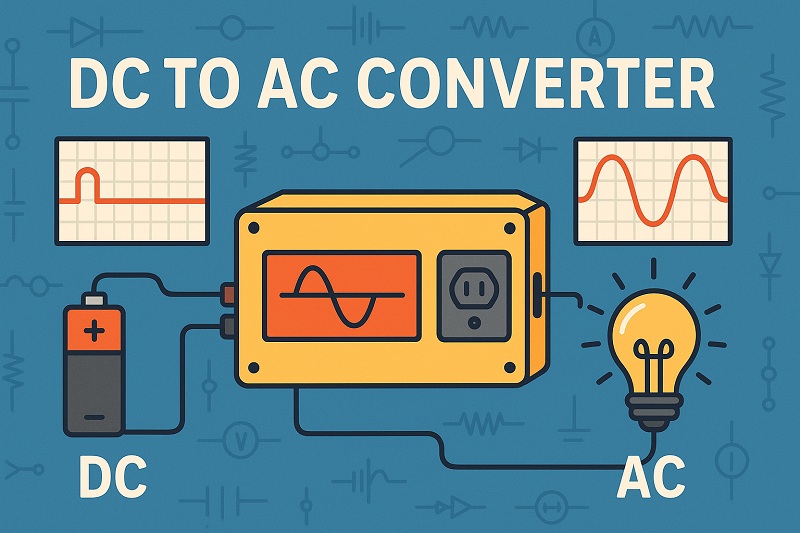
An inverter is an electronic device that converts Direct Current electricity into Alternative Current Electricity. There are two key things inverters do:
- DC power flows in one direction and is stored in batteries. If you have solar panels, the inverter helps in charging the battery through generated electricity.
- Then, the inverter supplies AC power to household appliances so you can use them.
Most homes run on AC power, so the main job of inverters is to convert the battery’s DC power into usable AC electricity.
Why is DC to AC Conversion Important?
Electricity supplied by the grid to your home is AC or Alternating Current. On the other hand, an inverter converts this AC electricity to DC to charge batteries connected to it. As the electricity is stored in DC form, you can’t directly use it to run appliances like a fan, a TV, an air conditioner, and many other household appliances.
The conversion is crucial, and an inverter does the same job here. It converts DC electricity back to AC so you can run electronic appliances. Inverts ensure three key things:
- Safe power conversion
- Stable voltage supply
- Protection for sensitive electronics
Detailed Working of Home Inverter – Step-by-Step Process
When an inverter powers your house, three things are going on. Let’s take a close look at each step:
-
Charging Mode
When the power supply is available, the inverter allows AC power from the grid to pass directly to appliances. All the electrical connections and devices that are connected to inverter-powered plugs take current from the grid, while the inverter adds no extra benefit here. Meanwhile, inverters convert AC power to DC for internal charging of batteries. So, an inverter is just like a charger, which regulates power, supplies to electrical points, and keeps the battery full.
-
Power Cut Detection
As the power supply fails from the grid during a blackout, the inverter detects the power cut and starts working.
- Inverters are directly connected to the main power supply, so they detect the absence of a grid supply within milliseconds.
- In this situation, inverters switch to battery mode so your fans, lights, TV, and other appliances keep running.
The switch is so fast that most people don’t notice the small flicker when the main grid is not supplying power to your house.
-
DC to AC Conversion Process
The most important step in the working of inverters is to convert DC to AC power. Five things are going on here:
- The DC enters an electronic circuit.
- Switching components rapidly turns the DC on and off.
- This creates a waveform that mimics AC power.
- The transformer adjusts the voltage to suitable levels.
- The output is delivered to appliances as AC electricity.
There are various components in an inverter that help in stable conversion.
Types of Output Waveforms in Inverters
No doubt that inverters are great at their work, but not all inverters are made the same way. You can find a difference in the quality of the AC power’s output waveforms. There are three types:
-
Square Wave Inverters
- Basic and Low Cost
- Usually creates a hearable noise in appliances
- Not great for sensitive devices
-
Modified Sine Wave Inverters
- Better than a square wave due to the modified conversion
- Most suitable for basic household use
- Doesn’t create noise in appliances
-
Pure Sine Wave Inverters
- Perfect quality AC power waveform conversion
- Ideal for computers, LED TVs, and Modern Appliances
- Highly recommended for homes
Most inverter manufacturers now offer pure sine wave inverters due to huge demand in the market.
Key Components Inside Inverters
Five major components are used in an inverter:
- Battery: Stores DC Power
- Charging Circuit: Convert AC to DC power for battery charging
- Switching Circuits: Creates an alternating waveform
- Transformer: Used in adjusting voltage
- Control Unit: Manage switching and protection
These are five common things that you will find in every inverter. The difference comes from the quality of components, their efficiency, and additional safety features.
Efficiency of Inverters
The efficiency of an inverter depends upon how much input DC power is successfully converted into AC output. For example, if an inverter is rated with 90% efficiency, then it is losing 10% of energy during conversion. Modern inverters are highly efficient, and they also minimise energy loss. Choosing highly efficient models is better as they will reduce your electricity bills by reducing wastage.
Safety Features in Modern Inverters
Most people choose inverters based on their type of use, features, and budget. However, looking for a built-in protection system and other safety features is also important. Here are five key features that one should never skip on:
- Overload protection
- Short circuit protection
- Low battery cut-off
- Overcharge protection
- Thermal protection
These features ensure a longer life of both the inverter and the battery, while keeping the users safe during power cuts.
Bottom Line
An inverter is a great investment for people who not only love convenience but also for people who don’t want interruptions in everyday life. Finding the right inverter model becomes easier if you consider the appropriate VA rating, battery capacity, and safety features.
Meanwhile, if you have an inverter, then avoiding overloading and maintaining the battery health will ensure a prolonged life of the battery and the inverter. Even the backup performance improves. You can also expect excellent battery backup if you follow the basic and practical tips.

Comments are closed.