
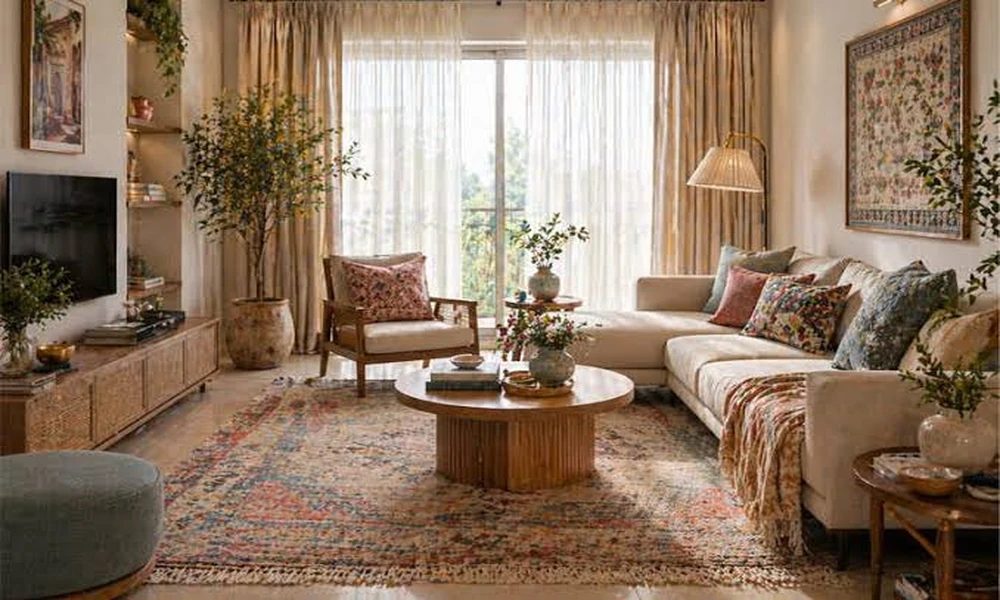
The Cold Snap Nobody Plans For
A house can have the thermostat cranked and the fireplace crackling, and still feel unwelcoming the moment guests walk in without a single cozy accent in sight. Winter décor often gets reduced to lights on the porch and a wreath on the door, while the interior spaces where people actually gather are left bare and chilly-looking. When that happens, the emotional warmth of the season doesn’t translate into the rooms where families spend the most time. Couches look stiff, chairs look unfinished, and the whole space can read as more functional than festive.
This gap matters more than people assume, especially during the weeks when relatives visit, neighbors stop by, or kids are home from school for an extended stretch. A living room that doesn’t invite anyone to curl up and stay a while works against the entire point of the holidays. Comfort is part of hospitality, and textiles are one of the fastest ways to signal that a space was prepared with care. Skip that step and the room feels like it’s merely tolerating the season rather than celebrating it.
What Interior Habits Reveal About Seasonal Comfort
Design habits tend to shift noticeably once the weather turns, and the shift says a lot about what people actually crave at home. Homeowners swap lightweight throws for heavier ones, trade bright summer cushions for deeper tones, and add layers to sofas that weren’t there in October. These changes reflect a real desire for tactile comfort once the air gets colder and the days get shorter, and people respond by reaching for softer, heavier materials wherever they can.
Pattern choice follows a similar logic. Plaid shows up again and again in winter interiors because it carries an association with cabins, fireplaces, and family gatherings that few other patterns can match. It reads as traditional without feeling dated, and it pairs easily with the greens, reds, and neutrals already dominating most holiday color schemes. Many households specifically look for plaid holiday blankets when refreshing their living room for the season, since the pattern does double duty as both decoration and genuine, usable warmth. That combination of visual cue and physical comfort is why plaid remains a go-to choice year after year instead of fading into a passing trend.
The appeal also comes down to flexibility. A plaid throw doesn’t have to match an entire design scheme to look intentional, which makes it an easy addition for people who don’t want to overhaul their whole living room just because the calendar changed. It can sit on an armchair, drape over the back of a sofa, or get folded at the foot of a bed, and in each case it reads as a deliberate styling choice rather than an afterthought.
Styling a Room So It Actually Feels Like the Holidays
Putting a plaid throw to work in a room takes very little effort once it’s in hand, but a few small decisions change how effective it looks. Draping it asymmetrically across one arm of a sofa tends to look more natural than folding it into a perfect square, since the slight disorder mimics how a blanket actually gets used. Layering two different textures, like a chunky knit next to a smoother plaid weave, adds visual depth without requiring any extra furniture or decorations. These are small adjustments, but they’re the kind that make a room feel lived-in rather than staged.
Placement matters as much as the blanket itself. A throw tossed near a reading chair invites someone to actually sit down and use it, while one left folded on a shelf mostly just sits there looking tidy. Putting blankets within easy reach of the couch, the window seat, or wherever people naturally gather in the evening turns them from decoration into something genuinely functional.
Timing the switch matters too. Bringing plaid throws out right after Thanksgiving, rather than waiting until a week before Christmas, gives a home more time to feel settled into the season instead of rushed into it. The earlier the shift happens, the more natural it feels by the time guests start arriving for holiday gatherings. A living room dressed for winter well before the busiest weeks hit tends to feel calmer and more prepared, which is its own kind of gift to whoever walks through the door.

Comments are closed.