Category

Eco-Friendly

Category

The Leviathan gas field is situated near Israel, away from its cost in the Mediterranean Sea. It is located about 29 miles to the southwestern end of Tamar gas field. Existing right in the Levantine Basin, the Leviathan gas field is situated about 81 miles to the west of Haifa in the water. This gas field boasts off an area that is Very rich in hydrocarbons. It could very well be the largest gas finds of the decade.

As a result of the year 2017, it was estimated that the Leviathan gas fields could produce enough gas for meeting all the domestic needs of Israel for the next 40 years. It is expected that this field will start operating near the end of the year 2019.

In order to further explore the prospects of the area with respect to gas drilling, Delek drilling joined hands with Noble Energy and the two companies cooperated in this entire venture of gas exploration.

Back in the year 2010, it was announced that according to what the seismic studies indicate, there is about 50% probability that the Leviathan field is rich in natural gas. It was estimated that the size of the reserve would be around 16 trillion cubic feet. In cubic meters, this would be 450 billion cubic meters. Indeed, this is quite a huge reserve.

In the initial exploration, drilling was done about 16,960 feet deep after which the gas was discovered. It was more like a test drill that was done in order to confirm the presence of natural gas. Quite fortunately, natural gas was found in abundance. This was announced around December 30th, 2010. The total drilling costs incurred in this exploration were around $92 million.

In the second part of the exploration, the drilling was intended to be about 23,600 feet deep. This was an extra reserve of a natural gas, which was expected to hold roughly 600 million oil barrels. However, reaching the deeper layers could not be possible as a number of technical issues arise in the process. These issues were faced because of the extreme depth of the basin and harsh conditions underneath.

Indeed, the Leviathan gas field possesses huge prospects for Israel in terms of natural gas. Considering the depleting reserves of naturally occurring resources all over the globe, the recent discovery of this natural gas reserve could play a big role in improving the economy of Israel. As a result of this, a number of projects have sprung up in the last decade and many more plans are expected to be put forward in the coming few years. It is expected that the plant will start operating in the year 2019, near the end.
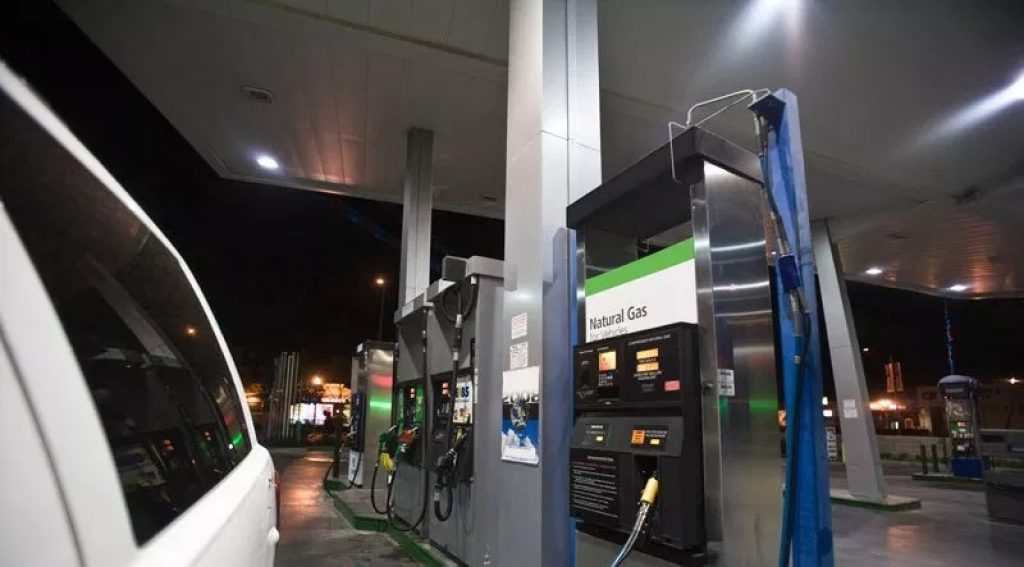

The production of biofuel can have nothing but a positive impact on the environment. This is because biofuel is biodegradable and therefore safe when released into the environment. Biofuel is produced to reduce gas emissions from greenhouses. It also mitigates the effects of global warming which is caused by the use of fossil fuels.

Petroleum-Based Products Are Not Sustainable  

Reliance on petroleum products is not sustainable in the long run. Coal and oil are especially detrimental to the environment for the following reasons:

  • They are both responsible for the release of greenhouse gases when they are burned.
  • The means of collecting them be particularly hazardous.
  • They are both nonrenewable which means they are exhaustible.

A number of countries in the world have seen the necessity of ridding themselves of their reliance on oil and coal. They are doing this by replacing these products with biofuels such as ethanol and biodiesel. Learn more about biofuel by clicking on MBP Solutions Ltd  

Farmers can take to growing energy crops which can be used to generate biofuel. Such crops include:

  • Corn
  • Soy
  • Rapeseed
  • Switchgrass

Biofuels Burn Clean

Biofuels do not produce toxic fumes such as sulfur or aromatics. In addition, there are no unpleasant smells produced such as those associated with synthetic fuels. They produce greenhouse gases but at much reduced levels and they capture carbon.

Consider some of environmental disasters that have happened in the past, like oil spillage in the sea which have caused insurmountable damage to the world’s sea life. There is nothing of the sort to be apprehensive about with biofuels. Corn or soy is highly unlikely to poison the sea.

Is it Possible to Switch to Biofuel Now?

It is not possible to do so right away, but the switch is being made gradually. There are some massive changes that need to be made in farming in order to grow the crops that would facilitate the creation of biofuels. Moreover, there would be the need to use chemical fertilizer extensively in order to grow the required energy crops. This could create problems for water-borne plant and animal species which could be choked by the algae that would grow as a result too much fertilizer.

Uses of Biofuel

Biofuels help to meet the demand for transportation fuel. There are two main components of biofuel: ethanol and biodiesel.

  • Ethanol

This is a renewable fuel that is derived from plant materials which are collectively classified as biomass. Ethanol is an alcohol. It is used together with gasoline as a blending agent to reduce carbon dioxide and increase octane. Other smog-causing elements are also reduced.

E10 is one of the most common blends of ethanol-gasoline which is combined at the ratio of 10% to 90% respectively. Vehicles known as flexible fuel vehicles are designed to run on E85, which is a gasoline-ethanol blend of 51% to 83%. This however, is dependent on the geography and the weather conditions presented by the seasons.

Most ethanol today comes from plant starches and sugars. Scientists are looking into the possibility of developing technology that would facilitate the use of elements like cellulose and non-edible fibrous plants as well.

  • Biodiesel

Biodiesel is a liquid fuel that is derived from renewable materials such as used vegetable oils, new vegetable oils, and animal fats. It is a cleaner-burner that is used in the place of petroleum-based diesel in to fuel compression-ignition engines. It is biodegradable, meaning it is nontoxic and is used as a compression-ignition fuel, like the petroleum-based diesel it replaces.

It can be combined with petroleum diesel in any percentage, but the most common blend is the B20 which contains biodiesel-petroleum diesel in the ratio of 20% to 80% respectively.

Biodiesel is produced by combining vegetable oil, recycled cooking grease, animal fat and alcohol.

The world is moving on from petroleum-based fuel to biodegradable fuel. Now more than ever, the world has recognized the need to use products that will not harm the environment further.

Ever since the 1800s there has been a mains system for providing water and sewage disposal. A large part of the UK is covered by this mains network. However, there are still places, largely in rural areas, where a property has private drainage. What happens if a property is not connected to the mains system is that it will have its own septic tank system installed. There are rules and regulations relating to the construction of this type of system and any waste collected from it has to be disposed of in the correct way.

How a Septic Tank Works

Septic tanks are made up of two chamber systems below ground. Waste produced in your home flows or is pumped into the first chamber. There it undergoes anaerobic digestion. Any solids settle to the bottom of the chamber and are liquefied. The clear water at the top is drawn off into another tank where it undergoes aerobic digestion. The solids that remain in the first tank have to be periodically removed. This has to be done by a licensed contractor such as Oates Environmental.

Disposal of Septic Tank Sludge

Septic tank sludge removed from a property has to be disposed of in the correct way. Across the UK there are a variety of package treatment plants where the sludge can be collected and treated. Most of them will provide a place where the sewage is introduced to microorganisms that break down the organic matter contained in the sewage. Once the sewage has been treated in this way the water can be discharged to land or water. Much of the treated sludge is recycled to agricultural land for farmers to use as fertiliser. However, there are also companies that use it to create energy in various ways.

The Mains Waste Water Cycle

If your home or business is services by the mains water system it will follow the waste water cycle. This ensures that any water used is made safe so that it can be discharged safely back into the river system.

Waste water is first taken away via a system of sewer pipes that flow from your property to a sewage treatment works. As the sewage works the waste water goes through several cleaning processes. The first stage is the screening process that removes the larger objects and items that should never have been put down the drain. The primary treatment then separates human waste from the water. The secondary treatment takes place in large tanks and the good bacteria breaks down the not so friendly ones. A final treatment then allows the clean water to be removed and the good bacteria sinks to the bottom.

When the waste water has been sufficiently cleaned it can be returned to local rivers and streams. This water is constantly checked to ensure it meets certain standards. These standards are regulated by the Environment Agency.

For the past few years the trucking industry has been heavily criticised for its contribution to global warming via the release of carbon emissions. However, from tech companies to haulage firms themselves have been working together to find solutions to reduce unnecessary carbon emissions.

When we researched actions being taken by various business such as construction and infrastructure, mining firms, quarrying firms, and other businesses involved in the trucking of raw materials, we stumbled across a new ingenious weighing system named “The Load Volume Scanner”.

“The LVS solution supplied globally by a business named Load Scan has been reducing carbon emissions and helping businesses also increase their profit margins”

Find out more about Load Volume Scanners here

The LVS equipment is actively saving the environment by tackling issues within the supply chain that cause trucks to be in use longer than they need to be. The more trucks are put to use, the more carbon emissions are emitted, the more it costs the shipper, and trucks then require maintenance more regularly due to be in use for longer periods of time.  

Two examples of trucks in action when this could have been avoided:

  • Oversupply of materials: Problems such as oversupply of materials can mean trucks need to return to the customer being supplied to pick up the unwanted excess.
  • Undersupply of materials: Undersupply of materials means trucks need to return to the receivers site to deliver more goods.

For some, a simple truck journey to rectify an oversupply or undersupply of material may not seem like a big deal. In fact, if you add up the number of times trucks have to return to the receiver’s site as a direct result of oversupply or undersupply, the carbon emissions that come from these added journeys over the space of year build up to what many environmentalists say is intolerable.

The carbon emission stats in this case could apply to a single firm. However, if we start to add multiple journeys and multiple companies all going through the same process, then what it would be 50 additional journeys per year for a single firm can be up to 1,000 additional journeys per year if we include 20 firms in this figure.

In short, the point is that when you add multiple undersupply and oversupply problems together all from one firm, then add together multiple firms all regularly experiencing the same problem, and you have a severe problem with carbon emissions.  

Accurate Weighing Systems to Avoid Excess or Under Supply

Load Volume Scanners eliminate the need to for businesses to send additional trucks to rectify oversupply or undersupply problems. By using 3D imagining technology to measure the metric weight of the materials on a truck with +/- 1% accuracy. There are no mistakes made by the LV scanners, so the exact measurements can be confirmed and logged. The solution basically means that traditional weighing system should now become a thing of the past as LVS helps firms to not only reduce carbon emissions, but also to save costs.

Monitoring of Materials

Load Volume Scanners scan materials while the truck is moving using live 3D imaging. For firms that work with materials that are subject to moisture release or absorption, the LVS can continuously monitor the gain in loss while the truck is in transit. This allows firms to understand better how much material needs to be loaded so when it arrives at its destination, the correct weight is delivered.

LVS: An Environmental Miracle

The Load Volume Scanner is exactly what the trucking industry has needed for years. It effectively helps businesses advertise the fact they are environmentally conscious thus benefitting their corporate social responsibility campaigns.

The LVS also helps all stakeholders in the business recognise the efforts being made by trucking firms, mines, quarries and construction companies to reduce the amount of carbon emissions being emitted. Finally, with oversupply and undersupply problems resolved by LV systems, business are also increasing their bottom line.

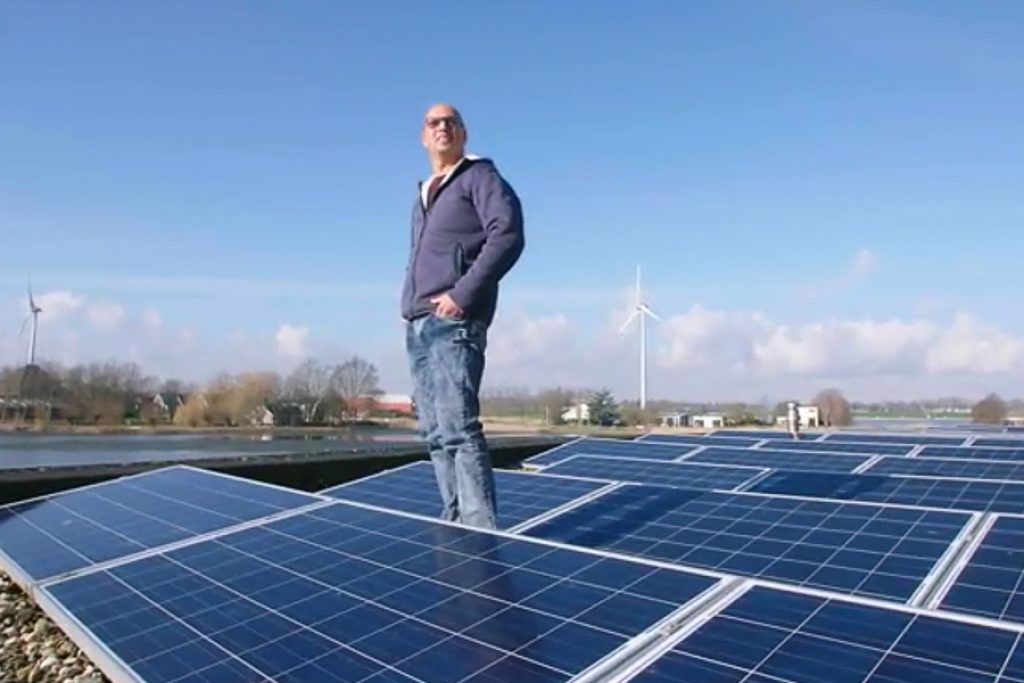
Perhaps you’ve noticed Andre Gerrmann through your social media channels: recently he was featured in a Dutch TV Programme called Cashing with Green, in which he proudly showed off his smart home. With his setup of 44 solar panels, 3 inverters and 1 smart home hub called Homey he managed to bring his monthly €155 energy bill down to just €20! We wanted to know his secret.

GET ACQUAINTED

Andre lives in Heerhugowaard, a town in the North of the Netherlands, with his wife and two sons. He’s made himself quite the smart home over the past few years, and has always been very interested in gadgets. The family lives in a ‘green’ home. It’s so efficient that he has been interviewed on national TV about green energy and savings.

Andre, formerly an avid ‘petrolhead’, recently changed to an electric car. “What an invention! It’s a shame we haven’t started developing this earlier.” He’s had numerous smart products in and around his home over the past few years. Because of his curious nature he wants to try everything at least once. In Homey he found a smart home controller that combines his enthusiasm and turns it into productivity: Everything can become useful. Nowadays, everything that’s brought into the house has to be compatible with Homey – a smart home hub that connects all devices and make them work together.

THE SETUP

Andre tells us that his Homey is set exactly so that he can see how much energy his three inverters produce. Depending on the energy produced, all sorts of different actions are set in to motion, like turning on the washer, dishwasher or heat boiler. He ties everything together with hardware by Plugwise.

Through the Homey app for Plugwise he found a smart way to see how well his energy supply is functioning. Homey’s ring shows how much energy is being used and/or if there’s energy being returned to the grid. A red ring means Andre’s family is using a lot of energy, a green ring shows there’s hardly any energy being used, and a blue ring tells the family that the solar panels are returning energy to the grid. Homey has a prominent spot in the living room, so that Andre exactly knows how green his home is at any given time.

TRANSFERRING TO ELECTRICAL HEATING

It’s extremely comforting to have this much insight into your family’s energy usage. The family always knows what amount of energy is going where. However, saving doesn’t come easily. And certainly not if you want to save as much as Andre. This is partly due to the presence of 44 solar panels, but also due to the fact that Homey controls a lot of devices with energy preservation in mind.

The biggest savings are due to the fact that the family uses a lot less of gas for heating. As long as the solar panels build up an energy supply, the entire home is being heated through air heat pump, or airconditioning. This is possible so long as it’s allowed to net your generated energy: That way you can generate energy during summer and use it in the winter.

COLD SHOWERS AND ENERGY-EATERS

Aside from the switch to electrical heating, the family took on another few measures to reduce their energy usage with a little help from Homey:

  • Doors are often left open. A habit that can cost a lot of energy during wintertime. They’ve made a Homey Flow that reports a door is left open after 1 minute based on the state of door sensors. This report is being repeated every 5 minutes thereafter, until somebody closes said door. This Flow is only running during the colder months of the year, and involves everybody in closing doors, thus saving energy.
  • Devices that are season-dependant, such as electric blankets, are automatically turned on and off, so that nobody accidentally leaves them on unnecessarily.
  • During winter, the sun blinds automatically go down in the evening to preserve the warmth inside the house. During summertime, the sunblinds automatically go up in the evening, to make sure everybody wakes up pleasantly.
  • And our personal favourite: The kids have a tendency to take very long showers. That’s why Andre used Homey to run the shower through a timer. After 8 minutes of warm water, the boiler is switched off with a smart socket.

All of this contributes to a drastic decrease of the energy bill. It did cost some time and effort, but the results are impressive.

Want to know more about Homey? Find it here: https://athom.com


SIngle use plastics are causing immense damage to our marine life and oceans. We’ve seen the videos of how much plastic rubbish there is floating in our oceans. It’s time to make a change and reduce single use plastics.

It always bothered me when I was in Asia about how much unnecessary plastics are used in daily life. When you go to the market you’re immediately given a plastic bag, even when buying a single item. Okay, not the worst offender, but still it’s become a force of habit for many people to automatically give you another piece of plastic even when the item you’ve just bought is covered in plastic. I hated going in 7-11. Buying a single drink, here’s a straw and another small plastic bag, great just what i wanted (not!).

But now, we’ve come to a juncture where so much single use plastics and plastics in packaging need to be curtailed and reduced. We’ve seen the repercussions of our plastic usage not least in our oceans. It is estimated that 5 to 13 million metric tons of plastic ends up every year in our seas. Just stop to think about those figures and how much of that waste is caused by us and inhabitants who live just 30 miles from sea. What effect is this having on marine life I hear you ask? A huge one. Every year over 100 million marine animals die from our plastic pollution. That is an astronomical number and something that we all help reduce, by changing our habits.

Time to make a change, here’s how:

  1. Say no to plastic straws. Gulp down that smoothie, you don’t need no straw
  2. Reduce, reuse and recycle. This old saying is as good as today as it’s always been. If you don’t live in a country that has good recycling options, then reduce and reuse as much as possible.
  3. Live a life of minimalism. Do you really need to upgrade your phone every year? Or buying a bottle of water each day when you go out. Think about how much money you’d save by carrying a water flask or holding off on that new phone purchase. We can live perfectly content lives without new stuff.
  4. Bring your own bags when you go shopping. With many countries now starting to impose taxes on single use plastics, now is as good as time as any to start bringing your own bags with you.
  5. Pick up a bit of rubbish each time you go to the beach. Every little helps, and if you see rubbish on the beach why not pick it up.

We can all help reduce this worrying trend of increased amounts of plastic in our oceans. Let’s leave our planet in a healthy state, so that our children and our children’s children can enjoy it too.

Author Bio: Shaka surf are an environmentally conscious online surf store selling clothing, home products and surf accessories. They have produced a great infographic on small actions and big changes for Earth Day. Most of their products are made from natural materials and they tried to minimise their carbon footprint as much as possible in their day to day operations. Visit their website for more info.

Solar power is considered to be the smartest alternative to traditional electricity and it can really reduce your monthly electric bill in a most significant way. If you live in a place where the supply of sun light is sufficient, you can easily produce electricity from the solar energy. As long as sun is there, the radiations can be used to generate electricity. The initial cost may be high but you can easily install a solar power system in your house and by installing homemade solar system in your house, you would be able to get the freedom from the local electrify provider.

There you can find mainly three common types of solar panels offered by solar panel companies in San Diego and those are amorphous panel, mono-crystalline panels and poly-crystalline panels. Flat plate collectors can be also used for producing solar energy. In most of the houses and offices, flat plate collectors are used in order to heat the water. The best advantage of using solar energy is that it is completely renewable and the most cost effective way to generate electricity in your own house. In this adverse economic situation most of the people are looking forward to get rid of huge amount of electric bills and solar power could be the best option here.

Solar power is the most environmental friendly way to produce electricity. Just like other fuel based electricity, it does not harm the environment with poisonous gas and unhealthy chemical compounds and that is the reason homemade solar power systems have achieved a huge popularity. Most of the house owners are installing solar panels in their house.

Over the past few years the price of homemade solar panel kits has been reduced to a great extent and that has made the way much easier to install a solar panel kit in your house. Solar panels kits come in different sizes and shapes so that you can easily choose the most suitable one for your house. Even you can reduce the price more by using smaller and portable device like solar powered lights. Actually these types of solar devices use small solar converter that can power only a single light and at the same time it helps to reduce the electric bill at the end of the month. Due to the huge usage solar energy, the price has been declined in this significant way.

The solar panel installing procedure is very easy and anyone can install it in their house. You do not need to have any kind of special knowledge in order to install a solar panel. Most of the homemade solar panel kits available on the market come with step by step manual guide where you can get the detailed procedures. Now it is time to dominate your electric consumption bill by opting for the option of solar installation system in your house.

Looking for solar panel installation in San Diego area? Visit bakerhomeenergy.com and talk to an expert.

In 2016 the World accepted 17 Sustainable Development Goals (SDGs) as key targets for countries, public and private sectors and civil society to utilize as a framework for achieving socially and environmental sustainable development.

Over the past 7 years, on the Southern Caribbean Coast, one company, EcoPlanet Bamboo, has developed a strong framework that, even before the SGDs were formalized, addresses to 16 of the 17 goals, setting an example for Nicaragua’s land use, forestry and agricultural sectors, and contributing to national development targets.

This article highlights 5 of the 16 SDGs that EcoPlanet Bamboo’s plantations are having significant direct impacts towards, and highlights the new phase of development that the company is in the process of bringing through its integrated manufacturing facilities.

SDG 1: No Poverty EcoPlanet Bamboo’s core social goal is the provision of secure, attractive and long-term employment in areas of the world where few opportunities. Providing individuals and communities with secure income, while ensuring that they become integrated within formal systems (for banking, health care and social security) is the first step in achieving a world with out poverty. Indirect benefits for Nicaragua’s communities have included the provision of training and education opportunities, and community development projects carried out in fringe communities each year. Although the company’s structure recently moved to a contractor system rather than permanent employees, the positive impacts remain the same.

SDG 5: Gender Equality EcoPlanet Bamboo has always provided equal opportunity employment but actively encourages the participation of women on all plantations with women contributing more than 25% of the Nicaragua teams, all the way through to managerial positions. Radio programs, community days, continuous stakeholder engagement are in use in order to educate and encourage women.

SDG 6: Clean Water & Sanitation EcoPlanet Bamboo has ensured access to clean drinking water for all employees and within all surrounding communities within the El Rama and Kukra Hill area in which the company operates. EcoPlanet Bamboo provides toilet facilities on all operations and for all employees, and ensures that these are clean and safe for use by all individuals, regardless of gender. Investment into surrounding communities targets the provision of clean drinking water, and associated sanitation.

SDG 8: Decent Work & Economic Growth Secure employment goes hand in hand with sustainable land and resource management and is the key to ensuring that development can occur in a linear and continuous fashion. EcoPlanet Bamboo strives to provide employment opportunities that are attractive, fair, and most importantly secure, not for a year or two, but for a generation. Secure livelihoods and steady income drives economic growth in rural areas. This mechanism of development has been proven to be far more successful than aid or charity, which is short term.

SDG 13: Climate Action Deforestation and land use change contribute more than 25% of global annual greenhouse gas emissions. EcoPlanet Bamboo’s Nicaragua’s plantations were the first in the world to develop the scientific methodologies for bamboo to be recognized for its climate change benefits. These projects have stored and sequestered more than 1.5 million tons of atmospheric carbon dioxide, contributing to Nicaragua’s national goals. With plantation operations well underway and the bamboo resource for Nicaragua rapidly reaching maturity, EcoPlanet Bamboo’s attention has been turned to manufacturing and value added processing. For five years the company has invested in clean technology development, for major consumer products. As these facilities come on line in Nicaragua over the next 12 month period, the contribution to 3 key SDGs is significant, not just for the Caribbean coast, but for Nicaragua as a country.

These are just a handful of examples for a few of the SDGs, aimed at providing an example that all sectors of society, public, private and non profit have a role to play in order to achieve national level targets.. As EcoPlanet Bamboo continues to grow and with the recent announcement of a Bamboo Purchase Agreement from Guatemalan consortium BAP Ltd., Nicaragua’s populations can support the country’s restoration work, as well as reduce our impact on the planet by ensuring that the products we all are buying are coming from a sustainable, renewable source while bringing sustainable development to our own communities.

Linen fabric is made of complete organic material and it may be one of the major reasons for having so many benefits of using it for clothing. Linen fabric is used for clothing purpose from ages. However, it was not so much popular to be used for clothing. Most of the upholstery, bed sheets, pillowcases, and table clothes were the main products of linen. Today, linen has started getting popularity in the segment of clothing and many popular designers are using the same fabric to make trendy attires.

Why Linen

Nobody can explain the reason why linen has lost its popularity some time back considering the advantages one has in using the fabric.

  • The unique texture of the linen fabric makes it extra durable. You may be surprised to know but if you inquire with your parents then they will be able to show you linen blankets and pillowcases given to them by their parents still in best conditions.
  • The linen fabric is very smooth, so let it be clothing on the skin or bed sheet, one will not feel any kind of grip or friction. This is one of the reasons that keep the linen material long lasting.
  • One of the major reasons for using linen made clothing, bed sheets and pillowcases were its ability to absorb moisture and bring down the heat. This is the reason linen was very popular in tropical regions. The linen fabric has the property of drying quickly compared to other materials.
  • Linen fabric is also called stain proof materials because it is very easy to remove stains off the linen than other popular materials.
  • It has the unique property of resisting bacteria and fungi, this makes it the best choice for the clothing. You may be amazed to know that people using linen clothing never complain about allergies.
  • Many people complain that their clothing loses the shine when they store it for a longer duration without using it. However, linen has the natural shine that does not fade away so easily if you have not used it for a long time.
  • The designers around the world have become the fan of linen fabric because it is pretty easy to make anything using this fabric. Cutting and sewing linen fabric are like a walk in the park.
  • Linen clothing or other materials made of linen does not fade away so easily. So, you don’t have to worry about separating dark color dresses from the white or light color dresses while washing. Linen clothes take lesser time to get cleaned compared to other materials.

By now you might have understood that line is one of the most useful fabrics and today it is getting the popularity that it deserved for a long time.

Don’t just go on referrals, research solar companies to find one that’s right for you.

Opinions expressed by LoomSolar contributors are their own.

We received 500+ inquiries everyday and discuss with solar customers. In this blog, we have our personal experience that are facing solar buyers to find right solar companies.                                              

Rohit, 32, a big fan of solar power, he lives in Delhi, India. But he knows the only little bit about solar. So he started about searching solar companies and solar installer denver co for almost two years. He says,” if you have a south-facing roof, it’s a no-brainer”.

During his research for two years, he met around half dozen solar companies for solar installation and solar financing, but he couldn’t get a satisfactory answer as he found solar panels per watt was expensive, solar financing was not easily available, also solar installation fort myers fl was a big challenge due to low budget.

He found, “There are 8 steps to find a good solar company”

  1. Know the reviews of the Companies
  2. Is Company’s product MNRE approved?
  3. Who will install the solar product at home?
  4. What kind of warranty do the companies will offer?
  5. Most companies tell me a site visit before sharing pricing, Do I need to do it?
  6. How would I get financing of solar
  7. Will the company provide me subsidy and net metering facility?

So how do you choose the right solar company? Here are the key factors to consider:

Step – 1: Know The Reviews of the Companies

Before you even look around for solar companies, first and foremost to know the reviews of these companies through online or companies doing the solar installation in the nearby area. It gives confidence about the quality of work and also about the kind of product they are installing.

Step – 2: Is Company’s Product MNRE approved?

MNRE (Ministry of New and Renewable Energy) approves the product and companies who can manufacture and Installs solar products, If the product is approved, you get eligibility for government subsidy and also you get net metering after inspections from Government.

Step – 3: Who will install the Solar Products at Home?

As we are at the beginning of solar power revolutions, enough technician and solar installers are not available in the market, everyone is learning in this stage. Therefore, it is important to find solar installer after many validations.

Step – 4: What kind of warranty do the companies will offer?

Solar Inverter, Solar Panels, and Solar Batteries are covered under manufacturer warranty, as per Industry standards, however, the warranty for product installations, man work is another story. Some firms will give you a warranty for one year another will give you for six months only

Step – 5: Most Companies tell me a site visit before sharing pricing, do I need to do it?

Yes, we would recommend doing that as each rooftop is different in terms of size and dimension, therefore, once installer visits your site, they get clarity about the south-facing area, shading on the rooftop, or any roadblock during installations.

Step – 6: How would I get financing of solar

As we know that solar products are expensive and for the normal customer it is out of their reach as the minimum 1kw system starts at Rs. 1 lacs only. So it can be affordable if solar financing is easily available, there are many financing companies available in the market who give finance on appliances such AC, refrigerators etc. but still financing on solar not available everywhere.

As Industry is evolving, the finance company will show excitement as growth increases, at present these companies offering solar finance at 12-18% interest which is really high.

Step – 7: Does the company will provide me subsidy and net metering facility?

Central and State Governments are more focused towards clean energy and they have set a target for 40GW solar rooftop by Fy2022. It is an aspirational target and to achieve this no Government is offering subsidy up to 30% to residential buyers, farmers etc. But it is a tedious process to get this subsidy and usually, it takes 3 to 6months to get it in your bank accounts. Besides, For net metering, you should have your own property or authorization from your landlord if you are using the rented property for solar rooftop installations.

Summary:

It is important to know the answer of basic questions so during installations and after completion of your project, there should not be any confusion about your expectation and delivery of product from solar companies. It should be well document agreement and always ensure to make full payment on work completion.