Category

Environment

Category

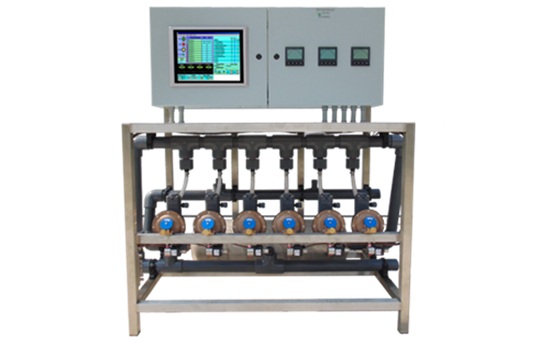
Many of the greenhouse operations use soluble fertilizers by irrigation in the roots of plants. This method is called Fertigation. The solution of fertilizer is measured and injected into the irrigation line. The water supplies the fertilizer to the plants. Greenhouse irrigation is becoming very popular in horticultural and agricultural sectors.

It decreases the waste material and the impact on the environment. This is adopted by many farmers. There are many important benefits. They are as follows:

  • The process of fertigation fertilizes the crops by using a hydroponic system or drip tape. It eliminates the use of the foliar Fertigation system delivers nutrients to the roots directly.
  • Crop growers install fertigation for greenhouses to decrease the use of water.
  • It also decreases the wastage of nutrients in large operations.
  • It reduces the application and rate of fertilizers. At this moment, increases the impact of fertilizer used.
  • It eliminates the need to water the crops in the evening. When you use the foliar spray, water gets collected on the plant surface. If the water is allowed to remain overnight, it can lead to the formation of fungus.
  • The techniques of fertigation reduce the cost of fertilizers and variations in the soil.

Methods of Fertigation

There are two main methods of fertigation. They are proportional fertigation application and quantitative fertigation method.

  • Proportional fertigation application method- The rate of injection is directly proportional to the rate of discharge of water. This is a very simple method. It is an efficient irrigation system where the demand for water and nutrients is high.
  • Quantitative fertigation- It is used in the open field where production is very high. It uses the bypass tank. The nutrient solution is measured in accurate quantity and then applied to each of the blocks. Fertilizer Injection Control and distribution is very accurate.
Fertigation tips

  • You must use the fertilizer that is soluble in water. It is necessary to avoid blocking.
  • You must clean the system after application of nutrients. It helps to keep the line clear and clean of debris. It prevents the system from clogging and corrosion.
  • Every plant has different requirement of nutrients. So, apply the nutrients according to the requirement.
  • As a crop grower, you must compare readings against nutritional values. You are advised to adjust the values according to the type of soil and life cycle.
  • Take care not to water the plant in excess. Nutrients like nitrogen might get leech into soil due to excess water.
  • Take care of the length of the pipe and uniformity in the nutrient flow.
  • To check the functioning of the system, you must measure the electrical conductivity of the solution.
  • The method of fertigation depends on irrigation type and size of the greenhouse. You can also dissolve fertilizer in the container. Also, a hose injector can be used to water the plants manually.

The process of fertigation makes the process of crop production very simple and easy. It includes less labor and money. You must be aware of the nutrient requirement of every crop.


Lawns- An Unhealthy Obsession?

We love our green lawns, don’t we? In the US, we have over 63,000 square miles of lawn. That’s about the size of Texas! We spend more than $40 billion each year on lawncare in North America. We take pride in a green, manicured lawn. It’s sometimes a requirement to keep your grass green depending on Homeowners Association rules. But what if this obsession was doing harm to our families and pets? What if it’s causing some severe environmental problems in our lakes and rivers? Should we continue to fertilize our lawns with synthetic nitrogen? Are there any alternatives if I want to keep up a healthy green yard? Keep reading to learn more.

Are We Bringing Toxins into the Home?

Probably the biggest reason you should ditch your chemical lawn is the unhealthy toxins. To delay the release of fertilizer, manufacturers add things like formaldehyde and synthetic polymers. These polymers are suspected endocrine disruptors. So, they might cause hormonal problems in humans. We don’t really know. And sure, the chemicals are all going outside the home. I get that. But how many times do your kids play barefoot outside? What about the dog and the cat? On top of that, you’re probably tracking that stuff into the house on your shoes. Makes you think twice about that green lawn, huh?

What’s Happening to our Lakes and Rivers?

In addition to the possible health risks, our addiction to lawns has harmed our waterways. All the nitrates from chemical lawns runs downhill. It eventually finds its way into lakes, rivers, and streams. This causes algae blooms and reproductive health problems for fish and other aquatic species. In fact, there’s an area in the Gulf of Mexico referred to as the “dead zone”. It’s an area where chemical fertilizer pollution has caused a massive die-off of fish and other species. At one point this area was larger than the state of Connecticut!  

How Can I Keep My Lawn and Avoid Toxins?

Remember how I mentioned that there are alternatives? You can keep your healthy green turf while avoiding toxic byproducts. Just switch to organic lawncare products. You’ll avoid the chemicals and you might actually have a healthier lawn. There are even some possible cost savings from switching to organic lawncare. Yes, I said cost savings! Sometimes we hear organic and immediately think “expensive”. But that’s not always the case. If you build up healthy soil, your grass has access to more of the minerals that are already present. This can save you money on both fertilizer and water in the long-run. So, consider making this small change for both your health and for the environment. You’ll be glad you did!

Landscape designs in Sydney keep changing with landscape designers becoming more creative with each new home. New trendy designs with every new home developed has seen the growth of Sydney landscapers in the last year.

A landscape designer in Sydney can set a house on site, connect it with the environment and create a welcoming exterior to the home.

They make the most of your outdoor space bringing your ideas to life. Landscape designers can design and plan gardens, swimming pools, paving and decking and many more. In Sydney more homes are becoming a creative haven, going with the trends in landscape designs.

Image result for 5 Landscape Designs Every New Sydney Home Must Consider

Here are five landscape design trends that can easily be incorporated into your home, giving it ambience.

Backyards designs 

It’s no longer old fashioned to have your own organic kitchen garden, it’s become one of the trend setting landscape designs. To achieve this you need a landscape designer to design easy garden features easy to maintain and sustainable. For easy maintenance, Sydney landscapers are using removable features for easy repair and replacement.

Indoor adventures 

It is rare to find vines creep the wall of a well structured lounge but it’s a growing landscape trend in Sydney. With more new homes in Sydney turning their courtyards and backyards into outdoor lounges and dining areas. With less foliage the outdoor space is easy to maintain, Sydney landscapers spruce it up with outdoor fireplaces and lighting fixtures. Trendy furniture set outside with proper fabrics that are waterproof fade resistant creates a delightful living space.

Water features 

A trend that is water features taking over landscape designer’s creativity to the next level. With more people appreciating how the sound of water helps create a relaxing ambience in the garden. Easily customized to fit your budget water features such as fish ponds and water plants give your garden that earthy look. As a new home owner you can decide on a portable fountain or a high end water wall to give it that exciting effect.

Sustainable designs 

Setting the trend in the Hills district new sustainable landscape designs have become a norm. Low maintenance designed gardens, drought-tolerant plants, less turf grass and evergreen foliage. New homes in Sydney are considering popular economic and environmental reasons with less maintenance in time and effort. Landscape designers use paving of lawns which are easily replaced are of low cost and easily maintained.

Vertical gardens 

Smaller spaces can be lit with vertical gardens, to either cover unsightly brickwork or concrete walls. It can conveniently be set up and easy to maintain, you can look for something simple such as out creepers and hanging baskets. Alternatively landscape designers can use modular systems typically boast of complex hydroponics which takes the fuss out of maintenance.

Landscape designs in Sydney continue to change with landscapers going the extra mile to make spaces attractive. If you are still looking for amazing landscape designs for your home these new trends will pique your idea and perfect it in your garden.

Water, a vital resource for survival of all living organisms, is also one of the most misused and abused of our natural resources. So much so that several parts of the world are facing acute water shortage and an uncertain future. In fact, water is famously quoted to be the ‘new oil.’

Water Supply and Demand Threats

Threats have increased at both supply and demand fronts. One of the major supply side threats is that we are withdrawing freshwater from surface water sources faster than they can be replenished. Another issue is the degradation of water, making it unsuitable to fulfil human needs. The increasing global population is a major demand side issue, the other being a substantial part of the population concentrated in regions that fail to keep up with demand levels. Lack of laws and proper regulation to monitor usage and consumption by individuals and industries are also creating an unhealthy balance in water distribution.

It is widely known yet often ignored, that if we continue to abuse water resources, our survival on the planet is at risk. Lakes are disappearing, the number of drought-prone regions around the world is increasing, and more and more countries are becoming water insecure. It is time that we become more conscious about these valuable resources to avert an irreversible water crisis for our future. Some individuals and companies have taken up the challenge and devised innovative solutions to beat the water crisis.

Solar Powered Water Purification System

Hot and dry climate are most prone to water shortages and whatever little water they do receive is deemed unfit for drinking. This drove a 16 year old American schoolgirl to use solar energy for  purifying water. She exposed titanium dioxide and zinc oxide to the sun’s UV radiation which produced a photo catalytic composite that purifies the water. This technology is safe, clean, green and cost effective. It is adopted widely by regions in USA experiencing hot and arid climates.Related image

Lifesaver Bottle

The lifesaver bottle used widely by welfare aid companies, hikers and army contingents was invented to solve the problem of dirty drinking water.  The lifesaver bottle uses a narrow pump which forces water through a filter of about 15-nanometres, killing all bacteria and viruses in the process. It has been a successful, cost-effective way of making available water suitable for daily consumption saving the financial and environmental struggle of delivering water to the remotest of places. Following the success of the lifesaver bottle, water treatment companies are also coming up with similar inventions on a grander scale to improve the quality of drinking water.

Leak Monitoring System

Utility companies are now using leak monitoring software to identify leaks and repair them. These software packages send data to a central hub about pipeline conditions, existing and potential leaks and areas that need urgent attention. Leak monitoring systems have saved millions of gallons of water from being wasted even before they reach homes or industries.

Water Efficient Showers

Most of us turn on the shower and let the temperature equalize before stepping in. In these few seconds or minutes, we waste good quality fresh water which could be used efficiently for some other purpose. There have been several inventions to minimize this wasteful practice. An eco-friendly shower system called Ogishower warms the water to the desired temperature in less than 30 seconds reducing shower time and water wastage significantly. Another device, the Cullector Ultra Efficient Shower, collects the running water and feeds it back into the system and re-filters it at the right temperature.

Waterless Baths

Dry bathing is relatively new yet fast emerging as an alternative to showers. It saves several litres of water and is one of the most efficient ways to conserve water. It mainly involves applying a lotion rich in essential oils, odour eliminating agents and bioflavonoids. It is estimated that dry bathing can save four litres of water per person per day, totalling to many millions of litres per year.

CO2 Cleaning

Water is used extensively for industrial applications as a cleaning agent which results in wastage of millions of litres of fresh water. A cheaper, greener solution involves using solid carbon dioxide in the form of dry ice particles to clean different types of surfaces. CO2 can be obtained from other industrial uses, therefore, it is inexpensive and can help to save significant amounts of water.

All nations, developed and developing, are facing the pangs of scarce water. It is as much a global issue as it is a domestic one. Creating more alternatives, using water intelligently and recycling are some of the ways to address the situation. Conserving our planet and environment is an individual responsibility. Stricter laws and regulation can play a supervisory role but ultimately it waters down to individual sensitivity and sensibility.


It is one of the main goals of the modern society to become independent of energy sources that are not renewable, such as oil, coal and natural gas. The sources we are trying hard to introduce into our daily lives are solar energy, wind power, hydropower and biofuel, to name only a few. Over the past couple of decades, we have come far in making this endeavor a true success, as well as something that will be used to everyone’s benefit. Here are some numbers that point to the fact that renewable energy will be a great source of employment as well.

It has been estimated that during 2015, the number of people employed in the renewable energy sector rose by 5%, meaning that it has reached 8.1 million people. Although the number is rising more slowly than it did during the years that preceded 2015, it is still showing a lot more promise than the employment statistics for the energy sector in general. At first, the countries that offered the highest number of jobs in the renewable energy sector were China, the United States, Brazil, India, Germany and Japan. Nowadays, the market is becoming dominated by Asian countries, which according to the latest statistics, hold a 60% share of all the jobs.

When it comes to specific fields in the renewable energy sector, the one that is growing the fastest is certainly wind power, at least according to the data gathered during 2015. It has experienced a 5% rise on a global scale, which means that it is currently employing 1.1 million people. This is mostly thanks to the latest developments in China, Germany and the United States.

The field with the highest number of jobs is definitely bioenergy. While biomass and biogas employ 822,000 and 382,000 people respectively, the number of jobs reserved for liquid biofuels has risen to a whopping 1.7 million. Considering the fact that in the meantime, the number of jobs has declined by 6%, it seems safe to conclude that bioenergy has nothing to fear when it comes to further growth and development

Another area in which jobs availability is constantly increasing is geothermal (http://exergy-orc.com/applications/geothermal. According to a survey conducted by GEA (Geothermal Energy Association), 86 out of 100 jobs in the geothermal industry are full time, which makes this business one of the best in the world for the ratio between full-time workers and the total number of jobs. Geothermal provides long-term employment for different people with different background and experience: mechanics, plumbers, pipe fitters, electricians, surveyors, hydrologists, electrical and structural engineers among the others, as the list may still continue.

According to a survey made by the Western Governors Association (WGA), the next future will see a significant increase in geothermal employment all over the world.

All in all, renewable energy is a sector that will yield a significant number of employment opportunities.

Using a rainwater tank to collect water that you can then use for drinking can be a great way of being environmentally friendly. These tanks were traditionally used in the Outback due to the lack of water service to remote areas, but today, many homes make use of rainwater tanks as a way of saving money. However, it’s not quite as simple as buying a barrel and setting it up outside your home. Putting in a rainwater tank and using it to create safe water for your home use requires a little more than that.

Learn About Rainwater Requirements

Each local council in Australia may have their own requirements for installing a rainwater tank on your property. If you plan on connecting your tank to a washing machine or to a toilet, for example, you will need to make certain it contains a backflow prevention device. This device stops the water from flowing back into the city water supply. These devices have to be installed by a licensed plumber and must meet a number of different guidelines.

Your council may have additional regulations that must be adhered to before you can install and use a rainwater tank. Make certain you understand all of these requirements before you install a tank.

Drinking Water

In most cases, you may not want to actually use your rainwater tank for drinking. The Australia Department of Health stresses that any rainwater tanks that are used to collect drinking water need to be well-maintained and cleaned regularly so that the water is as pure as possible. Filtering this water before drinking it is also recommended. Many people who use rainwater tanks in Brisbane use the water for showering, for washing clothes, and for filling their swimming pool while continuing to draw on water supplied by the city mains for drinking and cooking.

Keep Your Rainwater Tank Topped Up

Many people don’t realise that they need to make sure that their rainwater tank doesn’t completely empty. If it does, the cleanliness of the tank can be compromised and the water can become contaminated. To make sure this doesn’t occur, most tanks are connected to the water mains to top them up during dry periods.

First-Flush Rainwater Tanks

If your rainwater tank is a flush-first tank, it will have a device attached to it that actually sends any collected water back into the stormwater system first. When it returns to your system, it will pass through the filters in place by the stormwater system, reducing the amounts of sediment and contaminants that the water may have picked up.

Why Use Rainwater Tanks?

With all these different requirements and regulations that must be followed, is using a rainwater tank really worth it? Honestly, yes. Collecting and reusing rainwater for your toilets and washing can save you a good amount on your water bill by reducing your overall water consumption. You can also use it for watering your plants and your garden. It also helps to remove water from your roof and from collecting in your yard, which can help reduce the risk of costly flooding.

Who doesn’t love lounging around on a beanbag? There’s something so satisfying about plonking yourself down on one and feeling its shape adapt to the contours of your body. The only problem is that until now, beanbags have been cumbersome to transport, meaning that they aren’t easily portable. Fortunately, a beanbag that is compact enough to be folded and able to be carried anywhere is currently being financed via the crowdfunding platform Kickstarter. It also seeks to teach kids about the need for conserving endangered species.

These new portable beanbags are called Bean About, and a kids’-size version will hopefully soon be available, complete with artistic renderings of 3 endangered species to teach children about the importance of conservation. Quarterly donations will be made to 3 organizations that are fighting for the preservation of these creatures: Traffic, Virunga National Park, and The Australian Wildlife Conservancy. This seems like a great idea to benefit the natural world whilst giving children a comfy place to sit.


Debates about environmentalism are frequently presented in terms of what the government could be doing to minimize damage and help save the earth. Whilst it’s true that our leaders should be doing more to curb the devastating effects of industrialization and big business upon the natural world, it’s also the responsibility of the community as a whole to protect the planet. There are plenty of environmentally friendly open-source business models available to those with the time, resources, and inclination. A new cooperative movement has now launched with the intention of creating a platform and mechanisms for action on a local level.2

The People’s Co-operative (also known as Save The Earth) has launched with a single vision and goal in mind; to help preserve the earth through the creation and support of enterprise and initiatives that not only reward communities globally but is also inherently ethical, sustainable and ecologically friendly. According to head honcho Emlyn Mousley, it can’t solve the world’s problems overnight, but it can help people to try and make a change. The initiative is designed to financially support through ethical investment, a range of sustainable business models which will ultimately benefit communities – putting people before profit and choosing a kinder, less harmful and more eco-friendly way forward. Businesses such as permaculture, food forests, organic breweries, green schools, ‘pay as you feel’ cafes and artisan products are just a small example of the projects ‘Save The Earth’ are looking to support.

Emlyn Mousley commented: “Save the Earth Co-Operative is all about supporting the earth’s caretakers in setting up local craft shops, real ale organic breweries, patchwork farms, organic bakeries, help the homeless initiatives, eco-villages, aquaponics systems, planting herb gardens in derelict plots of land – the list is endless! If there’s a better way of doing things that benefits both people and the planet, Save The Earth wants to help turn it from an idea into a reality.”

Save the Earth is currently seeking to raise £4,500 via the crowdfunding platform Crowdfunder to seed initial support for key ethical and green initiatives both in the UK and abroad. Crowdfunder works along the same lines as similar platforms like Kickstarter and Indiegogo, relying on pledges from interested parties to help fund the project. The co-operative aims to provide people with a means of playing an active part in helping to minimize damage to the environment, rather than leaving the task in the hands of the apathetic powers-that-be.

Don’t you just love the maple syrup you eat as it is the most popular sweetener in the entire world? The syrup can be mixedwith anything to give it a sweetening taste whether it is your daily toast or pancakes. Just yummy! Canada is the major exporter of Maple Syrup across 50 countries. Consuming excess sugar for the entire day can be harmful which will lead to obesity and people who are suffering from diabetes are not able to enjoy the sweetening flavour of maple syrup.

But now a lot of companies like Maple Syrup Direct are giving the diabetic consumers maple syrup that aresugar free. But sugar free does not mean we will have to sacrifice the sweetening taste it has. The sugar free maple syrup will not only give the consumers a worry free maple syrup which they can eat the whole day without being worried leading to obesity.

Major health benefits given by Sugar-free maple syrup

As known by scientists and people, maple syrup is known to raises blood sugar level slower than the regular sugar. So it might be a good idea to add on the maple syrup in your diet instead of using your regular sugar to control the sugar levels in your body. Maple syrup contains adecent amount of minerals like manganese and zinc which will help in the growth of the body.

Antioxidants in sugar-free maple syrup

It also contains antioxidants that are needed for the body that will help in detoxification, anti-ageing and to fight off various diseases. So, compromising on maple syrup due to diabetes will be a bad idea as sugar-free maple syrup is there for the taking.

Companies like Maple Syrup Direct are now providing online-based maple syrup buying service that will help you order maple syrup at your convenience instead of rushing to your local grocery markets and stores.

The renewable energy revolution continues to grow dramatically worldwide, with investment in the sector hitting an all-time high in 2015. Solar energy plays one of the biggest roles in the growth of the renewable energy sector globally. Not only is solar becoming more affordable for the everyday consumer, but many nations are taking it upon themselves to develop utility scale solar projects. Here are the 10 countries with the largest amount of solar capacity in the world.

  1. Germany

Germany’s total capacity places them in the lead by a long way with 35.5 gigawatts of solar capacity. In 2014, solar panels accounted for between 6 and 7 percent of the country’s net electricity generation. It has been the world’s top PV installer for a number of years, with around 1.5 million photovoltaic systems installed nationwide. Germany has long term targets to increase its renewable energy capacity to 35 percent by 2020, 50 percent by 2030 and 80 percent by 2050.

solar

  1. United States

The US has a particularly strong position in the utility-scale solar market, with 25 gigawatts of installed solar capacity as of 2015. National legislation surrounding renewable energy development has contributed greatly to the success of the United States in the solar energy race.

  1. China

China comes in second at 18.3 gigawatts capacity. The world’s most highly populated nation is also unsurprisingly the one with the largest carbon footprint. Since 2009, china has increased its solar capacity by 6,000 percent. Being one of the world’s largest solar panel manufacturers has made the journey to being one of the largest consumers of solar power in the world slightly easier for China as their panels don’t need to be imported.

  1. Italy

With a total capacity of 17.6 gigawatts, Italy is doing very well for itself considering its relative size to China. The percentage that solar takes up of Italy’s energy supply is more than any other nation in the world, at 7.8 percent. This figure is expected to double by 2030. Solar power growth has been especially rapid in recent years with Italy’s solar capacity increasing 15-fold between 2009 and 2013.

  1. Japan

Japan is another small nation that boasts an impressive capacity of solar power relative to its geographical size and population. With 13.6 gigawatts of solar capacity so far, Japan has increased its solar capacity more than 500 percent in the space of four years. One area Japan is particularly known for in the solar industry is the development of floating solar farms, which are an increasingly popular form of utility scale solar installations.

  1. Spain

Spain is one of the sunniest countries in Europe, giving it little excuse not to be up to scratch in the solar stakes. Coming in sixth place with 5.6 gigawatts capacity, Spain is the world leader in what is called concentrated solar capacity – a technology that uses mirrors or lenses in order to concentrate a large amount of solar energy into a relatively small area.

  1. France

Similar to their German neighbours, the French have been able to benefit from generous FiT schemes that have strongly encouraged the adoption of solar panels for private installation. France currently has 4.6 gigawatts of solar capacity. A declining political support for solar energy and renewable energy progress has been impacting the growth of solar energy in recent years.

  1. Australia

As one of the sunniest nations in the world, Australia’s solar industry is a booming one, particularly in the home solar panels industry. With around 4.1 gigawatts of capacity, once again, FiT schemes and financial rebates have greatly encouraged home owners in Australia to install solar panels in their homes. According to Australian Solar Quotes, Solar power currently costs around half of what grid electricity costs in Australia, so the simple price of electricity is pushing the solar boom to new heights in the island nation.

  1. Belgium

Belgium is a small but serious competitor in the global solar competition, with 3 gigawatts of capacity despite a small size and population. In 2014, Belgium made history when their solar capacity supplied more than 20 percent of the nation’s overall electricity consumption. Belgium uses a ‘Green Certificates’ scheme which is similar to a FiT scheme to encourage the adoption of renewable energy.

  1. United Kingdom

The UK being on the list of largest solar nations in the world is evidence that any nation can be a serious solar contender in spite of unfavourable amounts of sunlight. The UK boasts around 2.9 gigawatts of solar capacity.