
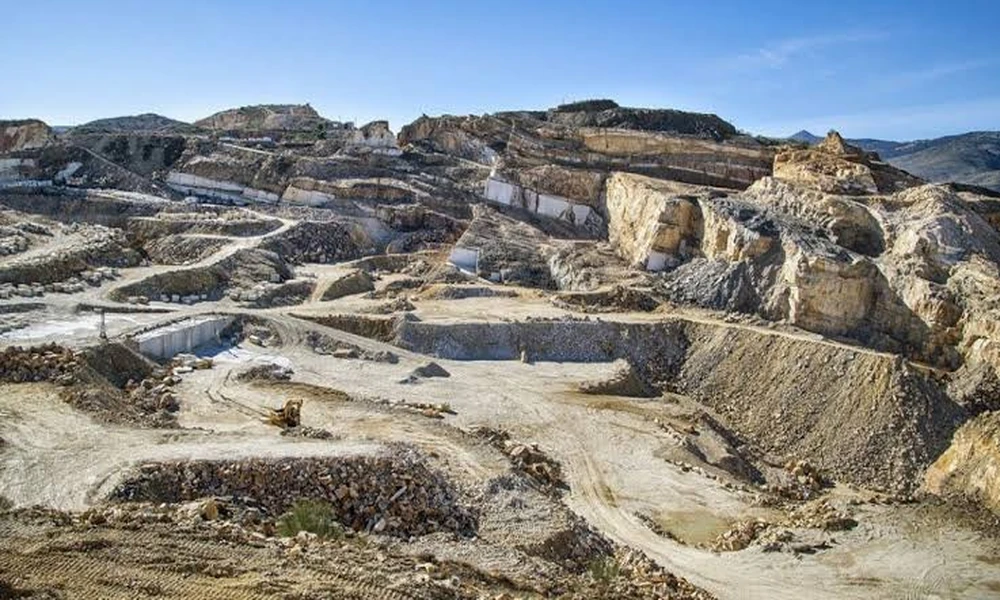
The industrial history of American mining is recorded in two forms. The first is the documented record of discovery and production, the gold of California, the silver of Colorado, the copper of Montana and the coal of Appalachia, along with the towns, railroads and industries that grew around them. The second is written into the landscape as abandoned shafts, waste-rock piles, tailings impoundments, altered stream channels and mine workings that continue to collect and discharge water decades after extraction ended.
For most of that history, mining law and reclamation law developed on separate timelines. The General Mining Law of 1872 was written to promote mineral development, and comprehensive federal requirements to reclaim disturbed land did not arrive until the 1970s. The discipline that now governs mine closure, spanning hydrogeology, geochemistry, tailings stability, acid-rock drainage, water treatment, erosion control, revegetation, long-term monitoring and financial assurance, emerged gradually, and much of it developed in response to the documented consequences of mines that closed without such planning.
Mining Law Built for Extraction
The General Mining Law of 1872 was enacted during a period of federal policy focused on settling and developing the western territories. The statute opened valuable mineral deposits on federal land to exploration and purchase, and it concerned itself with access, claims, mineral rights and development. It contained no requirement to close tailings facilities, control acid drainage or restore a watershed after extraction ended.
Many of the abandoned hardrock mines across the West originated under that framework, in which an operator could exhaust an ore body and depart without a reclamation plan or the financial assurance required today. The Bureau of Land Management notes that many such sites were never properly reclaimed and that financially responsible parties are often difficult or impossible to locate because of the age of the workings. The scale of the resulting liability appears in federal inventories. A March 2020 Government Accountability Office report found that four federal agencies had identified at least 140,000 abandoned hardrock mine features on lands under their jurisdiction, of which about 67,000 posed or might pose physical safety hazards and about 22,500 posed or might pose environmental hazards, and the same agencies estimated that more than 390,000 additional features might exist on federal land but had not yet been catalogued.
Hydraulic Mining and the First Legal Limits in California
California produced one of the earliest demonstrations that mining waste does not remain at the mine. By the 1850s, operators were using high-pressure water cannons to break down gold-bearing hillsides, a method that dislodged large volumes of gravel, sand, clay and finer sediment and sent the residue downstream. The debris raised downstream riverbeds, buried agricultural land and increased flooding along the Sacramento River system.
The conflict between hydraulic miners and downstream landowners reached the federal courts in Woodruff v. North Bloomfield Gravel Mining Company. Edward Woodruff filed suit in 1882 on behalf of affected property owners, and in 1884 Judge Lorenzo Sawyer issued a decision restricting the discharge of hydraulic mining debris into the river system. The ruling established that extraction could not be treated as an isolated activity once its physical effects extended beyond the mine boundary. Congress followed in 1893 with the Caminetti Act, which created the California Debris Commission and allowed hydraulic mining to continue under permits only where its wastes could be kept from damaging navigable rivers and downstream property.
The First Federal Reclamation Programs
Mining technology advanced faster than reclamation policy through much of the twentieth century. Surface coal mining expanded, hardrock mines grew larger, open pits replaced some underground operations, and milling produced larger volumes of tailings and waste rock that could remain chemically active long after extraction stopped. No comprehensive national requirement obligated coal operators to reclaim the land they disturbed until 1977.
The Surface Mining Control and Reclamation Act, signed in 1977, created two systems. One regulated active and future surface coal mining, and the other established an Abandoned Mine Land program to address damage from coal mining that predated the law. The Office of Surface Mining Reclamation and Enforcement administers the statute, which built a national framework requiring operators to account for the post-mining condition of a site and moved the cost and responsibility for closure toward the party disturbing the land.
Colorado had reached a similar position a year earlier. The state’s 1976 Mined Land Reclamation Act declared mineral extraction and the reclamation of affected land to be compatible and necessary activities, and it required operators to reclaim the lands they disturbed. The large legacy of abandoned hardrock mines, which the coal-focused federal program did not reach, required a separate legal instrument, and that instrument arrived in 1980. The Comprehensive Environmental Response, Compensation, and Liability Act, known as Superfund, authorized the federal government to respond to releases of hazardous substances and created a framework for holding potentially responsible parties financially liable for cleanup. Courts later interpreted that liability broadly, including retroactively for contamination that occurred before the statute existed, which made the law central to the cleanup of historic mining districts.
The Eagle Mine and a Century of Underground Workings
The Eagle Mine occupies a 235-acre site near Minturn, Colorado, along the Eagle River, roughly 75 miles west of Denver. Mining in the Battle Mountain area began in the 1880s, and in 1912 the Empire Zinc Company started consolidating individual claims into what became the Eagle Mine. The operation eventually developed more than 70 miles of underground workings, and production shifted over time from gold and silver toward zinc, which ended in 1977, with copper and silver mining continuing until the mine closed in 1984. Tailings were slurried through pipelines and deposited at several locations along the river corridor.
When mining ended, the underground workings flooded, and contamination that included arsenic, cadmium, copper, lead and zinc was documented in soils, structures, sediments, surface water and groundwater. The Environmental Protection Agency added the site to the National Priorities List in 1986. Remediation extended well beyond sealing an entrance, and it involved plugging mine portals, addressing contaminated materials, controlling seepage and runoff, constructing a water treatment plant and establishing long-term surface water and groundwater monitoring. The potentially responsible party carried out most of the construction between 1989 and 2001, and water treatment and monitoring have continued since. The mine operated for roughly a century, and its documented reclamation history now spans several decades.
The Berkeley Pit and Post-Closure Hydrology
Butte, Montana presents a different closure problem. When mining at the Berkeley Pit ended in 1982, the Atlantic Richfield Company shut off the pumps that had kept groundwater out of the underground workings, and water began rising through the interconnected mine system and into the pit. The pit is roughly 1,600 feet deep and now holds hundreds of feet of acidic, metal-laden water, and contaminated water from the pit and surrounding workings is treated at a facility designed to handle up to seven million gallons per day. The site forms part of one of the largest mining-related Superfund landscapes in the country, and it demonstrates that groundwater movement does not stop when mining ends.
Summitville and the Cost of Financial Failure
Gold mining in the Summitville district of southern Colorado dates to 1870, at an elevation of roughly 11,200 feet in the San Juan Mountains. In the mid-1980s, Summitville Consolidated Mining Corporation, a subsidiary of the Canadian company Galactic Resources, operated an open-pit mine that used a cyanide heap-leach process to recover gold and silver. Cyanide-bearing and metal-bearing solutions leaked from the heap-leach pad into the underdrain system and reached the Wightman Fork of the Alamosa River, and a dead zone eventually formed along roughly 17 miles of the river below the mine.
In December 1992, Galactic Resources notified the state of Colorado that it intended to declare bankruptcy and abandon the site, and the Environmental Protection Agency assumed emergency responsibility on December 16, 1992 to prevent contaminated water from overtopping the heap-leach containment. The site was added to the National Priorities List in 1994. Remediation has included detoxification and closure of the heap-leach pad, management of waste piles and mine drainage, extensive earthwork, source-water controls and construction of water-treatment infrastructure, and it stands among the largest mine cleanups funded through Superfund. Long-term treatment and monitoring continue, the site remains on the National Priorities List, and the State of Colorado assumed the ongoing treatment cost of about two million dollars per year beginning in 2021.
Abandoned Mines Without a Responsible Owner
Modern mines can be required to provide financial assurance and approved closure plans, which leaves the hardest cases among the historic mines whose operators are long gone. The federal inventories quantify the problem. Beyond the 140,000 catalogued features identified in the 2020 Government Accountability Office report, the same agencies estimated more than 390,000 additional uncatalogued features, and the Environmental Protection Agency stated in 2026 that more than 100,000 abandoned hardrock mine sites across the United States carry public health and environmental hazards.
The difficulty became publicly visible at the Gold King Mine near Silverton, Colorado in 2015. An Environmental Protection Agency team and its contractors were investigating ongoing mine-water discharges when excavation above a collapsed adit released pressurized water that had accumulated behind the blockage. Approximately three million gallons of acid mine water flowed into the North Fork of Cement Creek, a tributary of the Animas River, and the resulting orange plume drew national attention. The agency has noted that the surrounding Bonita Peak Mining District already discharged roughly 5.4 million gallons of acid mine drainage per day from 48 historic mine and mining-related sources.
Reclamation as an Engineering Discipline
The shift from the framework of 1872 to current practice can be described as a move toward planning for closure during a mine’s operating life. Contemporary reclamation can require characterization of groundwater and surface water, geochemical testing, acid-rock drainage prediction, slope-stability analysis, erosion modeling, tailings consolidation, seepage controls, cover and liner design, stormwater management, water treatment, revegetation and years of monitoring. The National Academies of Sciences, Engineering, and Medicine describes reclamation as the preparation of a mine and processing site for beneficial use while reducing future environmental damage, and it acknowledges that complete reclamation may not be achievable at some sites, where long-term monitoring can remain necessary.
That complexity is visible in reclamation work underway at legacy mine sites in Colorado. Engineering Analytics, Inc. reports providing engineering and project-management services associated with tailings collection and disposal, stream stabilization, water management, historic-structure preservation and reclamation planning at the Idarado Mining Company’s inactive sites in the Red Mountain Mining District of Ouray County and at the Pandora Mill near Telluride. The firm’s broader mine reclamation and closure work includes heap-leach pad closure, tailings impoundment closure, groundwater modeling, acid-rock drainage mitigation, geochemistry, cover and liner design, slope stability, erosion control, water treatment and regulatory support, and the company reports having prepared reclamation plans, cost estimates, construction specifications and engineering designs for more than 60 mine sites worldwide.
Tailings Management and Third-Party Cleanup
Two recent developments extend the trajectory further. In August 2020, following the January 2019 collapse of a tailings dam at Vale’s Córrego de Feijão mine near Brumadinho, Brazil, the United Nations Environment Programme, the Principles for Responsible Investment and the International Council on Mining and Metals launched the Global Industry Standard on Tailings Management. The standard, developed through the independent Global Tailings Review chaired by Bruno Oberle, addresses the full tailings facility lifecycle from site selection and design through construction, operation, monitoring, closure and post-closure. Engineering Analytics reports that it is applying the standard’s principles to client tailings impoundments.
The United States has also begun to address one of the persistent obstacles to cleaning up abandoned hardrock mines, the concern that a party voluntarily remediating a mine it did not create could incur liability for the resulting pollution. Congress enacted the Good Samaritan Remediation of Abandoned Hardrock Mines Act on December 17, 2024, establishing a pilot program that authorizes the Environmental Protection Agency to issue up to 15 permits allowing qualified third parties to remediate abandoned mine sites while receiving specified protections from liability under the Comprehensive Environmental Response, Compensation, and Liability Act and the Clean Water Act.
The program moved from statute to a specific project in 2026. On June 11, 2026, Trout Unlimited applied for the program’s first proposed Good Samaritan permit, for the Bodie Mine in Okanogan County, Washington, and the Environmental Protection Agency opened public review of the application in July. The proposed work would excavate and remove up to 790 tons of contaminated soil and sediment along 400 linear feet of Toroda Creek and reconstruct the streambank, which the agency estimates would prevent approximately 104 tons of contaminated tailings from eroding into the creek each year. The tailings at the site contain arsenic, cadmium, lead, mercury, selenium, copper and zinc.
The Questions That Now Govern Mine Closure
The change across this history can be traced in the questions that policy has asked. Nineteenth-century mining law asked how quickly minerals could be located, claimed and developed. Federal statutes of the 1970s and 1980s added the question of who bears responsibility for the damage that remains after extraction ends. The regulatory and technical developments documented here, from the Surface Mining Control and Reclamation Act through the Global Industry Standard on Tailings Management and the 2024 Good Samaritan Act, point to a further question now embedded in closure planning, which concerns what a mined landscape, watershed and engineered system should look like over the decades that follow the removal of the last ore. Answering it draws on geology, hydrology, geochemistry, civil engineering, environmental science and long-term monitoring, and it rests on the record of earlier mines that documented what closure requires.

Comments are closed.