
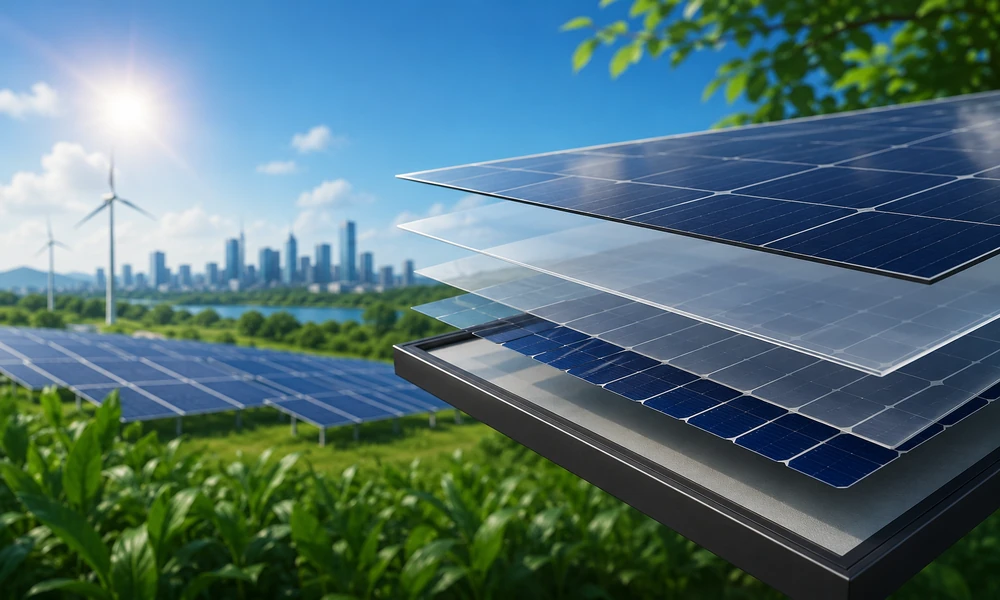
As countries race toward carbon neutrality and renewable energy targets, solar power has become one of the world’s fastest-growing clean energy sources.
While breakthroughs in solar cell efficiency often dominate industry headlines, another critical innovation is quietly driving the long-term success of photovoltaic (PV) systems: PV encapsulation materials.
Encapsulation films do far more than hold solar cells together. They protect the module’s most valuable components from moisture, ultraviolet (UV) radiation, thermal cycling, mechanical stress, and electrical degradation. By extending module lifespan, improving energy yield, and reducing maintenance needs, advanced encapsulation materials play a fundamental role in making solar energy cleaner, more affordable, and more sustainable.
Protecting Solar Investments for Decades
A solar module is expected to operate reliably for 25 to 30 years-or even longer. Throughout its lifetime, it must endure extreme weather conditions, including scorching heat, freezing temperatures, heavy rainfall, strong winds, high humidity, desert sandstorms, and coastal salt spray.
Without effective encapsulation, environmental factors gradually degrade solar cells, causing power loss, delamination, discoloration, corrosion, and potential safety risks.
Modern encapsulation materials-including advanced EVA solar film, POE solar film, EPE, and other next-generation functional films-provide superior protection by offering:
- Excellent moisture resistance
- High UV stability
- Strong adhesion to glass and backsheet materials
- Resistance to potential-induced degradation (PID)
- Enhanced mechanical durability
These improvements help preserve electrical performance throughout the module’s service life, ensuring that every installed solar panel continues generating clean electricity for decades.
Increasing Clean Energy Output
The cleanest energy is the energy that can be generated consistently over time.
Advanced encapsulation materials contribute directly to higher lifetime energy production by maintaining optical transparency and protecting cells from degradation. Higher light transmission allows more sunlight to reach the solar cells, while improved material stability minimizes annual power loss.
Although a difference of only 0.2% or 0.3% in annual degradation may appear small, it becomes significant over a 30-year operating period. Millions of additional kilowatt-hours can be generated across a utility-scale solar farm, reducing the overall levelized cost of electricity (LCOE) while maximizing renewable energy production.
Rather than focusing solely on peak efficiency at installation, modern encapsulation technologies help preserve real-world energy performance throughout the module’s entire lifecycle.
Reducing Carbon Footprint Through Longer Module Lifetimes
Sustainability extends beyond producing renewable electricity-it also includes reducing resource consumption and manufacturing emissions.
Every solar module requires raw materials, transportation, manufacturing energy, installation, and eventual recycling. When modules fail prematurely, replacing them increases both costs and environmental impact.
Advanced encapsulation materials significantly reduce this burden by extending module longevity. Longer-lasting panels mean:
- Fewer replacement modules
- Lower manufacturing demand
- Reduced transportation emissions
- Less construction waste
- Lower lifecycle carbon emissions
In other words, improving module durability is one of the most effective ways to decrease the carbon footprint of solar energy over its entire lifecycle.
Supporting Next-Generation Solar Technologies
The rapid evolution of solar technology has created new challenges for encapsulation materials.
Emerging module architectures-including TOPCon, heterojunction (HJT), back-contact (BC), 0BB (Zero Busbar), and perovskite tandem solar cells-place higher demands on encapsulation performance. These advanced cells often require lower curing temperatures, higher optical clarity, stronger adhesion, improved electrical insulation, and better compatibility with innovative module structures.
Modern encapsulation solutions are evolving alongside these technologies by offering specialized resin systems, ultra-high transparency, enhanced flexibility, and optimized lamination performance.
Without these material innovations, many next-generation high-efficiency solar modules would struggle to achieve long-term reliability in real-world operating environments.
Enabling Sustainable Solar Deployment Worldwide
Solar installations are expanding into increasingly diverse environments, from deserts in the Middle East to floating PV plants in Southeast Asia and snowy mountain regions in Europe.
Each application presents unique environmental challenges, including extreme UV exposure, humidity, salt mist, sand abrasion, or rapid temperature fluctuations.
Advanced encapsulation materials can be tailored for specific operating conditions, ensuring reliable performance across different climates and installation scenarios. This adaptability allows solar energy to be deployed confidently in regions that were once considered difficult or high-risk for photovoltaic systems.
Looking Beyond Efficiency
As the global clean energy transition accelerates, success will no longer be measured solely by laboratory efficiency records. Long-term reliability, sustainability, and lifecycle value are becoming equally important.
Advanced PV encapsulation materials represent one of the industry’s most valuable yet often overlooked innovations. By protecting solar modules, extending operational lifetimes, increasing lifetime energy yield, and reducing environmental impact, these materials enable photovoltaic systems to deliver cleaner electricity with fewer resources.
In the decades ahead, continued innovation in encapsulation technology will not simply support the solar industry-it will help define how efficiently and sustainably the world achieves its clean energy future.

Comments are closed.